
Introduction
Why an Asbestos Re Inspection Survey Is Essential for Building Safety
An asbestos re inspection survey is a periodic check of known or presumed asbestos-containing materials (ACMs) already identified in a building — confirming they remain in safe condition and haven’t deteriorated, been damaged, or changed in risk level.
Here’s what you need to know at a glance:
- What it is: A follow-up inspection of previously identified ACMs — not a new full survey
- Who needs it: Owners and managers of non-domestic buildings where ACMs have been left in place
- How often: At minimum every 12 months, or more frequently in high-traffic or high-risk areas
- Why it matters: Damaged or deteriorating asbestos can release harmful fibers — causing serious lung disease and cancer
- Who should do it: A qualified, competent professional — not untrained in-house staff
- Legal basis: Required under the Control of Asbestos Regulations 2012, Regulation 4 (Duty to Manage)
If asbestos was found in your building and left in place, the work doesn’t stop there. Asbestos doesn’t stay static — it ages, gets disturbed, and can degrade. A one-time survey is just a snapshot. What protects people over time is ongoing monitoring.
That’s exactly what a re inspection survey delivers.
I’m Stephen Wenzel, Co-Owner and Executive Vice President of Banner Environmental Services, with over 25 years of experience in asbestos inspections, abatement planning, and environmental compliance across Massachusetts, Rhode Island, and Greater New England. My work with asbestos re inspection surveys has helped hundreds of property owners stay compliant, protect occupants, and avoid costly emergency remediation. Read on for a complete guide to understanding your obligations and keeping your building safe.
Understanding the Asbestos Re Inspection Survey
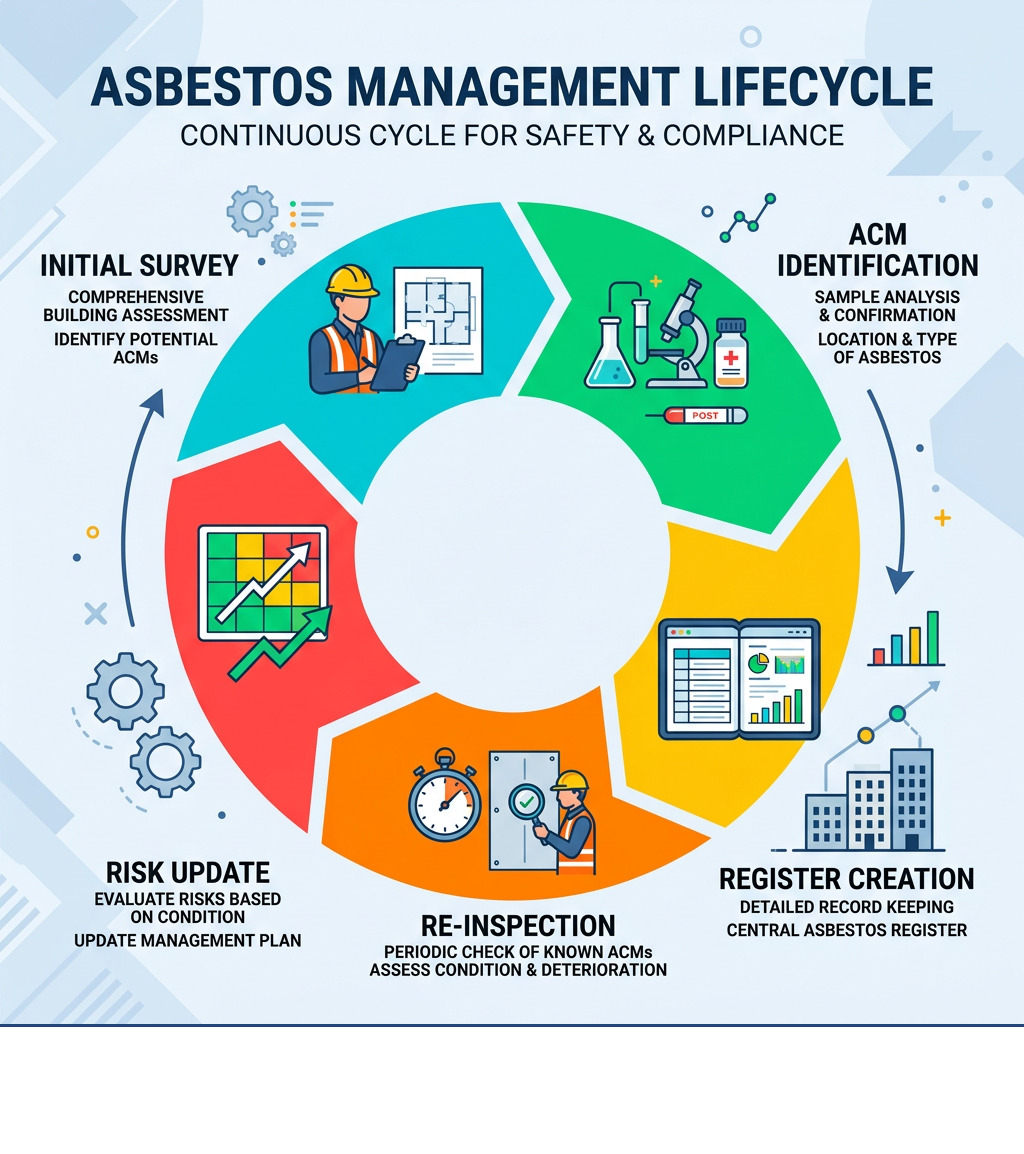
When we talk about an asbestos re inspection survey, we are looking at the “long game” of property management. It is not about finding new asbestos (though if new areas are disturbed, that’s a different story); it is about monitoring the health of the materials we already know are there.
Think of it like a wellness check for your building. If your initial survey identified asbestos-containing materials (ACMs) that were in good enough condition to be left in place, those materials are now part of your “managed risk.” Over time, factors like building vibration, water leaks, or even high foot traffic can cause these materials to degrade.
The primary goal of the re-inspection is to prevent fiber release. By catching a crack in a pipe wrap or a scuff on a floor tile early, we can recommend encapsulation or repair before it becomes a hazardous situation. This keeps your building safe and ensures your documentation remains up to date. To learn more about the foundations of this process, you can read our guide on What is an Asbestos Survey?
Management Survey vs. Asbestos Re Inspection Survey
It is common for building owners in Massachusetts or Rhode Island to get these two confused. A Management Survey is your starting point. Its purpose is to locate ACMs that could be disturbed during normal occupancy or routine maintenance. It involves sampling and a comprehensive look at the building’s current state.
An asbestos re inspection survey, on the other hand, is a targeted follow-up. We take the data from that initial Management Survey—specifically the Asbestos Register—and go directly to those spots. We aren’t reinventing the wheel; we are checking the wheel to make sure it hasn’t gone flat. If you are planning a more intrusive project, you might need something different, like an asbestos abatement survey which focuses on materials slated for removal.
The Role of the Asbestos Register
The Asbestos Register is the “living heart” of your compliance folder. It lists every known or presumed ACM, its location, its type, and its current condition. During a re-inspection, we use this register as our roadmap.
We update the risk scoring for each item. If a ceiling tile was rated “Low Risk” last year but now shows signs of water damage, its score goes up. This creates a clear audit trail. If a state inspector from the NHDES or a local health officer in Boston ever walks through your doors, having a freshly updated register is your best defense. It proves you are actively managing the risk rather than just hoping for the best.
Legal Requirements and the Duty to Manage
In environmental safety, “I didn’t know” is never an acceptable excuse. Across New England—from the busy streets of Worcester to the industrial hubs of Providence—strict regulations govern how asbestos is handled.
While the UK’s Control of Asbestos Regulations 2012 (Regulation 4) is often cited as the gold standard for defining the “Duty to Manage,” similar rigorous standards are enforced here by OSHA and the EPA. Specifically, Regulation 4 identifies “dutyholders”—usually building owners, employers, or managing agents—who are legally responsible for identifying asbestos and ensuring it doesn’t pose a risk to occupants. For more technical details on these requirements, the HSE guidance on managing asbestos provides an excellent framework that aligns with our domestic best practices.
Responsibilities of Property Owners
If you own or manage a non-domestic premise constructed before 1999 (the year asbestos was fully banned in the UK, and a key benchmark for many US regulations), you likely have a legal duty to manage. In states like New Hampshire, Maine, and Vermont, the rules are clear: if you have asbestos, you must have a plan.
This responsibility includes:
- Locating all ACMs (or presuming their presence).
- Keeping an up-to-date record (the register).
- Assessing the risk of fiber release.
- Providing this information to anyone likely to disturb the materials (like HVAC contractors or plumbers).
Regularly scheduled asbestos re inspection surveys are the only way to fulfill these duties accurately. Without them, your management plan is just a piece of paper that doesn’t reflect the reality of your building’s current condition.
Consequences of Non-Compliance
The fallout from skipping your re-inspections can be categorized into three “pain points”:
- Legal Penalties: State agencies like the NHDES or the Massachusetts DEP can issue heavy fines for failing to maintain accurate asbestos records.
- Health Hazards: This is the most serious. Undetected deterioration leads to airborne fibers. Once inhaled, these fibers can cause mesothelioma or asbestosis—diseases that often don’t show symptoms for decades.
- Financial Drain: It is always cheaper to manage asbestos than to clean it up after an accidental release. Emergency remediation costs are significantly higher than routine maintenance and re-inspections.
The Process: What Happens During a Re-Inspection?
When our team arrives at your site in Norwood, Quincy, or Manchester, we don’t just wander around. We follow a systematic, evidence-based process.
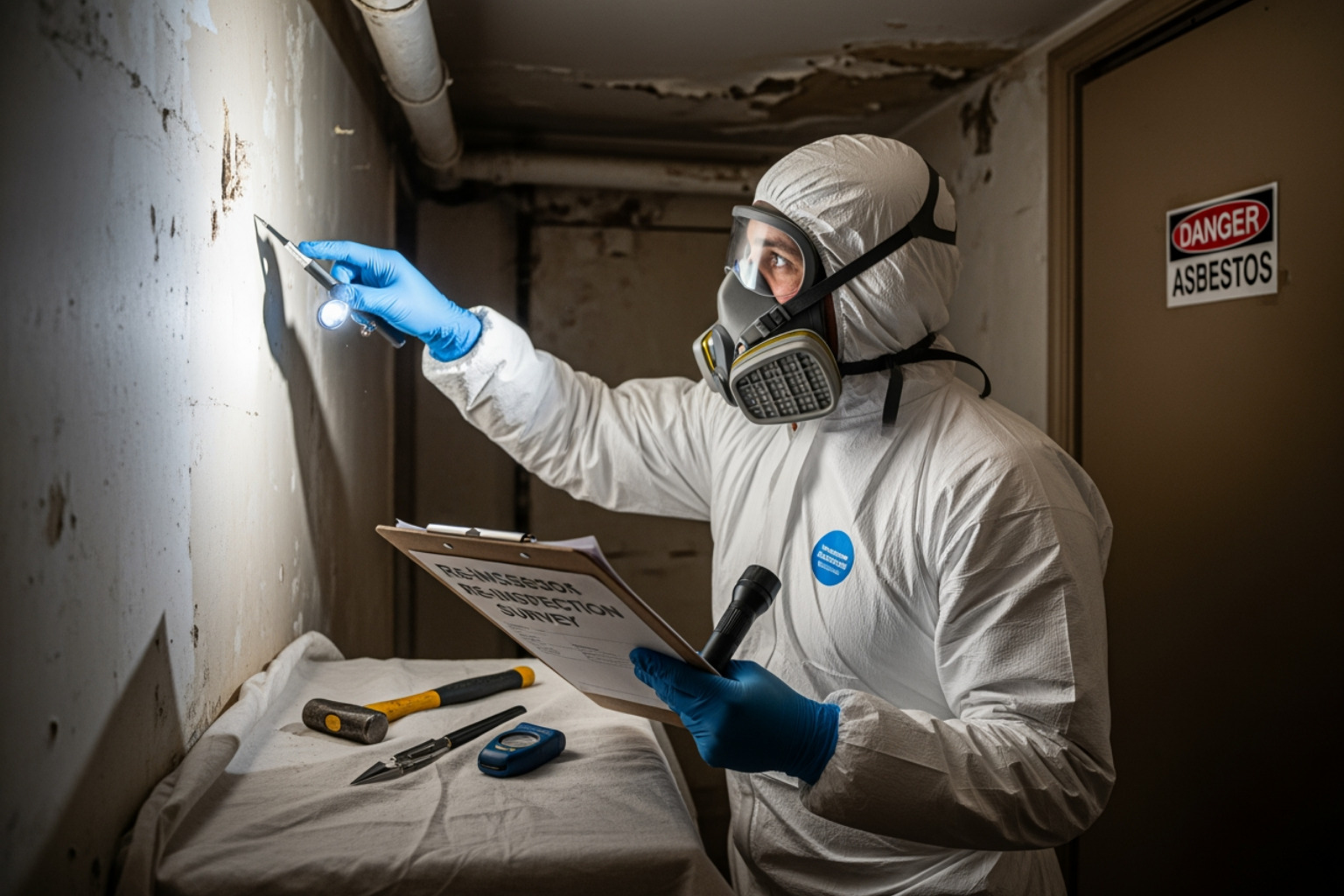
First, we check in with the designated person (the dutyholder) to review any changes to the building since the last visit. Then, we move through the building using the previous survey as a guide. For every identified ACM, we perform a visual inspection. We look for signs of:
- Physical damage (impacts, scratches, or scuffs).
- Environmental degradation (water damage, heat, or mold).
- Changes in accessibility (is a previously hidden pipe now exposed?).
We take photographic evidence of every item. This allows us to compare “then vs. now” to see if there is a trend of deterioration. We also apply material assessment algorithms—a fancy way of saying we score the material based on its type, condition, and surface treatment to determine its potential to release fibers.
Our surveyors are highly trained and follow standards recognized by bodies like the United Kingdom Accreditation Service (UKAS), ensuring that the data we collect is impartial and accurate.
Updating the Asbestos Management Plan
Once the field work is done, we head back to the office to compile the report. This isn’t just a list of findings; it’s an update to your Asbestos Management Plan.
If we find that a material is deteriorating, we will provide clear recommendations. This might include:
- Encapsulation: Applying a protective coating to seal the fibers.
- Repair: Fixing minor damage to prevent further wear.
- Removal: If the risk is too high, we may trigger an abatement project.
- Monitoring: If the material is still in good shape, we simply set the date for the next re-inspection.
For more on how we verify these materials, check out our page on Asbestos Abatement Testing.
Handling Inaccessible Areas
In every building—whether it’s an old mill in Fall River or a school in Nashua—there are areas we simply can’t get to without damaging the structure. We call these “inaccessible areas,” such as the inside of service ducts, wall voids, or underfloor crawls.
In these cases, we use default presumptions. If we can’t prove there isn’t asbestos there, we assume there is. We record these areas with safety caveats in your register. Our professional judgment allows us to manage these hidden risks by monitoring the “access points” (like hatches or vents) for any signs of debris or dust that might indicate an issue deep within the void.
Frequency and Best Practices for Ongoing Safety
How often should you schedule an asbestos re inspection survey? While the standard industry recommendation—and the requirement for many regulatory bodies—is at least every 12 months, this isn’t a “one size fits all” rule.
Several factors can influence the frequency:
- High-Traffic Areas: If you have asbestos floor tiles in a busy corridor in a Boston office building, they will wear down faster than tiles in a locked storage room. These might need checking every 6 months.
- Vulnerable Locations: Materials near doorways, in loading docks, or in boiler rooms are more likely to be bumped or scraped.
- Building Vibration: Properties near train tracks or those with heavy industrial machinery can experience “vibration damage” that shakes fibers loose from ceiling coatings or pipe insulation.
For a deeper dive into why regular checks are vital, see our article on Asbestos Testing Services: Five Reasons.
When to Schedule an Asbestos Re Inspection Survey
Beyond your annual “anniversary” check, there are specific triggers that should prompt you to pick up the phone:
- Post-Repair Updates: If you’ve had a plumber in to fix a leak and they had to work near ACMs, you need a re-inspection to ensure nothing was damaged.
- Change of Occupancy: If a new tenant is moving into your commercial space, an updated survey protects you from liability.
- Damage Incidents: Floods, fires, or even a rogue forklift hitting a wall should trigger an immediate check.
In New Hampshire, keeping your paperwork aligned with state rules is easy if you use the NHDES Asbestos Management Forms to document your ongoing compliance.
Selecting a Competent Surveyor
You wouldn’t hire a gardener to fix your electrical wiring, and you shouldn’t hire an uncertified “handyman” to inspect your asbestos. Competency is a legal requirement.
When choosing a company, look for:
- Accreditation: They should be licensed in your specific state (MA, RI, NH, etc.).
- Qualifications: Look for surveyors with P402 certifications or equivalent local training.
- Experience: A team that has seen thousands of buildings will spot subtle signs of damage that a novice will miss.
- Impartiality: You want a surveyor who gives you an honest assessment of risk, not someone trying to sell you a removal project you don’t need.
Frequently Asked Questions about Re-Inspections
Can re-inspections be performed by in-house staff?
Technically, “Regulation 10” and similar OSHA standards require anyone performing these tasks to be “competent.” This means they must have the information, instruction, and specialized training to recognize asbestos and assess its condition.
While a maintenance manager might know the building well, they often lack the formal certification and liability insurance required to sign off on a legal Asbestos Register. Using a professional third party is the best way to ensure there are no oversights and to maintain “arms-length” impartiality for your records.
What happens if deterioration or damage is found?
Don’t panic! Finding damage is exactly why we do the survey. If we find a problem, the first step is immediate isolation. We may suggest cordoning off the area or sealing a vent.
Next, we perform a risk reassessment. Is it a small scuff that can be encapsulated with a specialized sealant, or is it a major break that requires professional removal? We will update your register immediately and help you plan the remedial action.
Are there specific requirements for high-risk buildings?
Yes. Buildings like schools, hospitals, and public housing often have more stringent requirements due to the vulnerability of the occupants. In a school setting, for example, the potential for children to disturb materials is much higher. In these environments, we often recommend more frequent inspections and a much lower threshold for deciding to remove a material rather than just monitoring it.
Conclusion
Managing asbestos isn’t a “one and done” task; it’s a commitment to the safety of everyone who walks through your doors. Whether you are managing a historic property in Providence, a retail portfolio in Warwick, or an industrial site in Nashua, regular asbestos re inspection surveys are your most powerful tool for maintaining compliance and peace of mind.
At Banner Environmental Services, we bring over 25 years of New England expertise to every project. As a WBE/DCAMM-certified company, our licensed professionals understand the nuances of state and federal regulations from Maine to Connecticut. We don’t just give you a report; we give you a strategy to keep your building safe and your liability low.
Don’t wait for a leak or an inspection to find a problem. Schedule your asbestos re inspection survey today and let us help you stay ahead of the risk.