
Black Mold in Your Home: What You Need to Know Before It Spreads
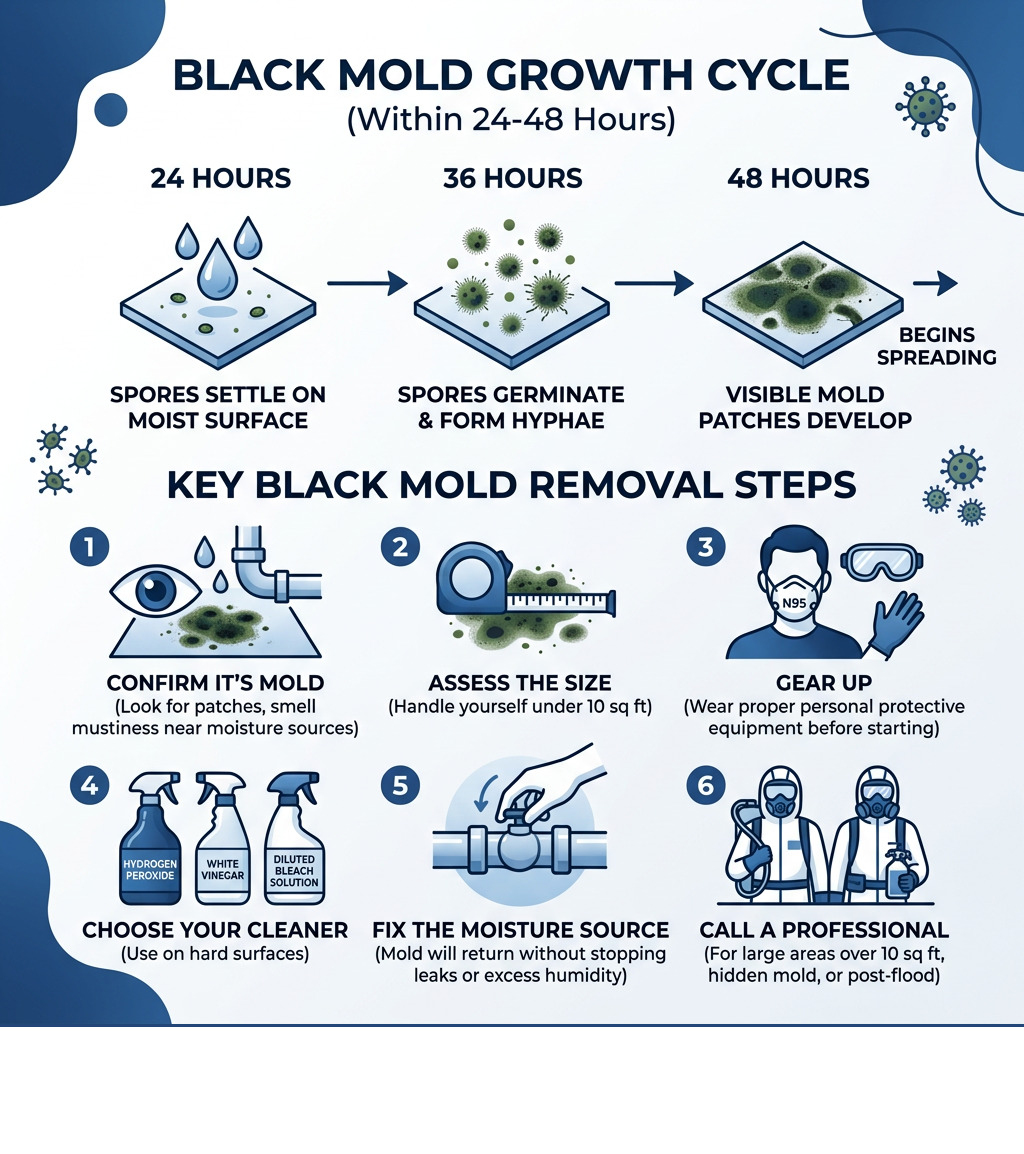
Black mold removal is something every property owner should know how to handle — and handle quickly. Here’s a fast summary of what to do:
Quick-start guide to black mold removal:
- Confirm it’s mold — look for dark green or black patches with a musty smell, usually near moisture sources
- Assess the size — areas under 10 square feet can often be handled yourself
- Gear up — wear an N95 respirator, sealed goggles, and non-latex gloves before you start
- Choose your cleaner — hydrogen peroxide, white vinegar, or a diluted bleach solution all work on hard surfaces
- Fix the moisture source — without this step, mold will return within days
- Call a professional — for anything over 10 square feet, hidden mold, or post-flood situations
Mold doesn’t wait. According to the EPA, it can begin growing within 24 hours of water exposure — and once it takes hold, simply scrubbing the surface isn’t enough. The spores are invisible to the naked eye, the roots can go deeper than what you can see, and if the underlying moisture problem isn’t fixed, you’ll be back to square one within weeks.
That’s the frustrating reality many property owners face: they clean the mold, it comes back, and the cycle repeats. The key isn’t just removing what’s visible — it’s understanding why it’s there and how to stop it for good.
I’m Stephen Wenzel, Co-Owner and Executive Vice President of Banner Environmental Services, with over 25 years of hands-on experience in mold remediation and environmental compliance across New England. My work in black mold removal — from containment strategy to post-clearance testing — shapes everything you’ll find in this guide.
Identifying Black Mold and Understanding the Risks
Before we dive into the “how-to,” we need to talk about the “what.” In our 25+ years serving areas from Boston, MA to Providence, RI, we’ve seen all sorts of fungi. But the one that gets everyone’s heart racing is Stachybotrys chartarum, more commonly known as “toxic black mold.”
What Does It Look Like?
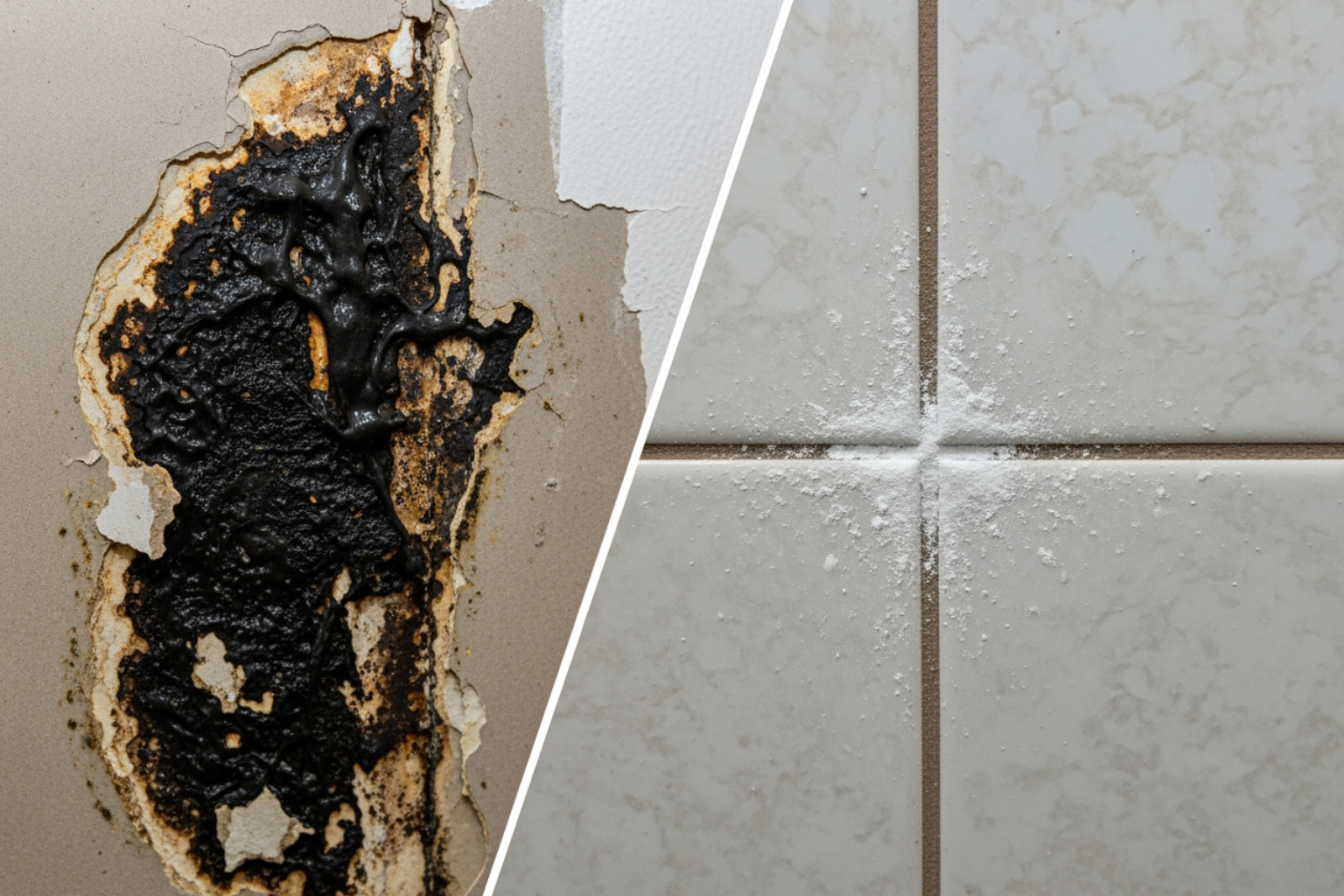
Black mold usually appears as dark green or black patches. It’s often slimy if there’s an active water source, but can look powdery or dry if the moisture has temporarily retreated. It loves to feast on cellulose-rich materials — think drywall, wood, paper, and cardboard.
How do you tell it apart from common mildew? Mildew is often gray or white and stays on the surface. Black mold is more invasive; it likes to set up shop deep within the fibers of your home’s structure.
The Health Risks: Why We Take It Seriously
We aren’t just worried about the structural integrity of your home in Worcester or Manchester; we’re worried about you. Black mold exposure: symptoms, risks & treatment can involve a wide range of respiratory and neurological issues.
Research shows that mold isn’t just an “allergy” problem. According to a scientific study on childhood mold exposure, almost 11% of children exposed to household mold developed asthma, compared to only 7% of children who weren’t exposed.
Common symptoms of exposure include:
- Chronic coughing and wheezing
- Persistent runny nose or sinus congestion
- Red, itchy eyes or skin rashes
- Increased stress, depression, or anxiety (as noted in a review of 19 environmental health studies)
- Immune system inflammation, marked by elevated C-reactive protein (CRP) levels
Beyond the spores themselves, mold releases microbial volatile organic compounds (mVOCs). These are the chemicals responsible for that classic “musty basement” smell. Even if you can’t see the mold, your nose might be telling you that a colony is hiding behind your walls.
Safe DIY Steps for Small Areas
If you’ve discovered a small patch of mold — specifically something smaller than 10 square feet (about a 3-foot by 3-foot area) — you can usually tackle it yourself. This is the “10 square feet rule” recommended by the U.S. Environmental Protection Agency. For more detailed steps, you can check out the EPA guide to mold cleanup.
However, before you grab a sponge, you need to protect yourself. Mold spores are light and become airborne the second you start scrubbing.
Step 1: Gear Up
Never attempt black mold removal without proper Personal Protective Equipment (PPE). We recommend:
- N95 Respirator: A minimum standard to prevent inhaling spores.
- Sealed Goggles: Not just safety glasses — you need goggles that seal to your face to keep spores out of your eyes.
- Non-latex Gloves: Long gloves that extend to the mid-forearm are best.
- Full Coverage: Wear old clothes (long sleeves and pants) that you can wash in hot water immediately afterward.
Step 2: Choose Your Weapon
Not all cleaners are created equal. Here is how common household items stack up for black mold removal:
| Cleaner | Pros | Cons |
|---|---|---|
| White Vinegar | Kills 80% of mold species; penetrates porous surfaces. | Strong smell; takes about an hour to work. |
| Hydrogen Peroxide | Non-toxic; bubbles to lift mold out of surfaces. | Can bleach fabrics or certain wood finishes. |
| Baking Soda | Absorbs moisture; mild abrasive for scrubbing. | Often needs to be paired with vinegar for full efficacy. |
| Bleach Solution | Fast-acting on non-porous surfaces (tile). | Does NOT kill mold on porous surfaces like wood or drywall; toxic fumes. |
For those looking for more info about mold removal services or professional-grade advice, the goal is to kill the mold, not just hide it.
Effective black mold removal Techniques by Surface
How you clean depends entirely on what you’re cleaning.
- Non-Porous Surfaces (Tile, Metal, Glass): You can use a bleach solution (1 cup bleach to 1 gallon water) or vinegar. Scrub the area, rinse, and dry completely.
- Porous Surfaces (Wood, Drywall): Bleach is actually counter-productive here. The water in the bleach soaks into the wood, while the chlorine stays on top. This actually “feeds” the mold roots. Instead, use undiluted white vinegar or 3% hydrogen peroxide. Let it sit for 15 minutes before scrubbing.
- Fabrics and Carpeting: If a carpet has been soaked and moldy for more than 48 hours, it usually needs to be discarded. For smaller items, a hot wash with vinegar can help.
If you’re dealing with structural wood, follow the CDC guidelines for bleach use carefully, but prioritize more info about mold remediation if the mold has deeply penetrated the grain.
Natural Alternatives for black mold removal
We know many of our neighbors in New England prefer eco-friendly, non-toxic solutions. If you want to avoid harsh chemicals, these natural options are surprisingly effective:
- Tea Tree Oil: This is an essential oil that is a natural fungicide. Mix 1 teaspoon with 1 cup of water in a spray bottle. Don’t rinse it off — let the scent dissipate naturally.
- Grapefruit Seed Extract: This is odorless and kills mold effectively. Mix about 10 drops per cup of water.
- Lemon Juice: The high acid content can break down mold, though it’s best for smaller spots on tile or grout.
- Baking Soda Paste: Mix with a little water or vinegar to create a paste for scrubbing grout lines.
For more info about residential mold removal using specialized equipment, we’re always here to help, but these household staples are great for minor bathroom “science experiments.”
Why Mold Returns and How to Fix Moisture Problems
You can scrub until your arms fall off, but if you don’t fix the water problem, the mold will come back. Mold is like a persistent uninvited houseguest — as long as there’s food (drywall) and drink (water), it’s staying.
The New England Factor
Living in places like Quincy, MA or Concord, NH, we deal with high humidity in the summer and condensation issues in the winter. When warm indoor air hits a cold exterior wall or a single-pane window, it creates moisture. This is why you often see mold in the corners of bedrooms or behind furniture.
Key Prevention Steps:
- Control Humidity: Keep your indoor humidity between 30% and 50%. Buy a cheap hygrometer to monitor this. If it’s over 60%, you’re asking for trouble.
- Use Dehumidifiers: Especially in basements. A good dehumidifier can be the difference between a dry storage area and a mold factory.
- Ventilation is King: Always run exhaust fans in the bathroom and kitchen. Make sure your clothes dryer vents outside, not into the attic or crawlspace.
- Fix Leaks Immediately: If a pipe drips or the roof leaks, you have a 24-to-48-hour window to dry it out before mold begins to colonize.
- Foundation Drainage: Ensure your gutters are clear and downspouts move water at least 6 feet away from your foundation.
For more deep-dives into moisture management, refer to the EPA’s A Brief Guide to Mold, Moisture and Your Home or the CDC facts on dampness and mold.
When to Call a Professional for black mold removal
While we love a good DIY spirit, some jobs are simply too dangerous or complex for a bucket and a sponge. At Banner Environmental Services, we follow the “10×10 rule” — if the mold covers more than 100 square feet, or if it’s in your HVAC system, it’s time for the pros.
You should call a professional if:
- The area is large: Anything over 10 square feet is the official threshold, but we recommend professional help for anything you can’t easily reach.
- There is hidden mold: If you smell mold but can’t see it, it might be inside your HVAC ducts or behind the drywall. We provide more info about mold inspection and testing to find these hidden colonies.
- The water was “black”: If the mold resulted from sewage backup or floodwater from a river, the area is contaminated with bacteria and pathogens that require specialized sanitization.
- You have health concerns: If anyone in the home has asthma, COPD, or a weakened immune system, they should not be present during the cleaning process.
- Structural damage: If the wood is soft or the drywall is crumbling, the mold has compromised the safety of your home.
According to HomeAdvisor mold remediation costs, the average professional cleanup ranges from $1,000 to $3,700, but the peace of mind (and the health of your family) is often priceless.
Professional black mold removal Standards and Compliance
When you hire a team like ours, you aren’t just paying for “cleaning.” You’re paying for remediation. There is a big difference. Removal is just taking the mold away; remediation is a comprehensive process that ensures it doesn’t return.
Our process includes:
- Containment Barriers: We use heavy-duty plastic sheeting and “negative air pressure” to ensure spores don’t drift into the rest of your house while we work.
- HEPA Filtration: We use industrial air scrubbers that capture 99.97% of particles down to 0.3 microns.
- Antimicrobial Treatments: We use EPA-registered solutions to kill the mold at the root and prevent regrowth.
- IICRC Certification: Our team is trained to the highest industry standards (S520), ensuring we follow OSHA and EPA protocols.
For business owners, we also offer more info about commercial mold remediation to keep your employees and customers safe in retail or office settings.
Frequently Asked Questions about Household Mold
What should renters do if they find black mold?
If you’re renting an apartment in Boston, Lynn, or Providence, finding mold can be stressful. First, document everything with photos. Send a written notice to your landlord immediately. Most local health codes in New England require landlords to maintain “habitable” conditions, which includes a mold-free environment.
If the mold is caused by a structural leak (like a leaky roof or a burst pipe in the wall), it is generally the landlord’s responsibility to fix it. If you’re worried about the risks, read more info about basement mold dangers to understand what you’re dealing with.
Is bleach or vinegar better for killing mold?
In the battle of black mold removal, vinegar actually wins most of the time. While bleach is great for killing surface mold on your bathtub, it cannot penetrate porous materials like wood or drywall. Vinegar contains acetic acid, which can reach the “roots” of the mold. Research shows vinegar is effective against 82% of mold species.
To understand why simply “cleaning” isn’t enough, look into more info about remediation vs removal.
Does black mold ever go away on its own?
Short answer: No. If you take away the water, the mold might go “dormant.” It stops growing, but the spores stay there, waiting. As soon as the humidity spikes or another leak happens, the colony reactivates. Furthermore, dry mold spores are actually easier to inhale than wet ones, meaning the health risk persists even if the area looks “dead.”
We’ve seen cases in college housing where mold was painted over, only to return with a vengeance months later. You can find more info about water damage repair and how to properly treat these recurring issues on our site.
Conclusion
At the end of the day, black mold removal is about more than just aesthetics. It’s about protecting your home’s value and, more importantly, your family’s health. Whether you’re in a historic home in Salem or a new build in Warwick, moisture is your number one enemy.
If you’ve found a mold problem that feels like it’s winning, don’t tackle it alone. Banner Environmental Services has spent over a quarter-century helping New Englanders breathe easier. From Cape Cod to the mountains of Vermont, our licensed, professional team is ready to help you reclaim your home.
And if your home renovation uncovers other environmental hazards, we’re experts in those too — including more info about vermiculite and asbestos abatement.
Don’t let the mold win. Give us a call, and let’s get your home back to the safe, dry sanctuary it’s meant to be.