
What Homeowners Need to Know About Asbestos in Homes
Asbestos in homes is a serious health and safety concern — especially if your house was built before the 1980s.
Here’s a quick summary of what you need to know:
| Topic | Key Fact |
|---|---|
| What is it? | A group of naturally occurring mineral fibers used in thousands of building materials |
| When is it dangerous? | When fibers are released into the air through damage or disturbance |
| Where is it found? | Insulation, floor tiles, popcorn ceilings, siding, pipe wraps, joint compound, and more |
| Can you see it? | No — you cannot identify asbestos by looking at it |
| What should you do? | Leave undamaged materials alone; hire a certified professional to test and manage it |
| Who is most at risk? | Homeowners renovating or demolishing pre-1980s properties |
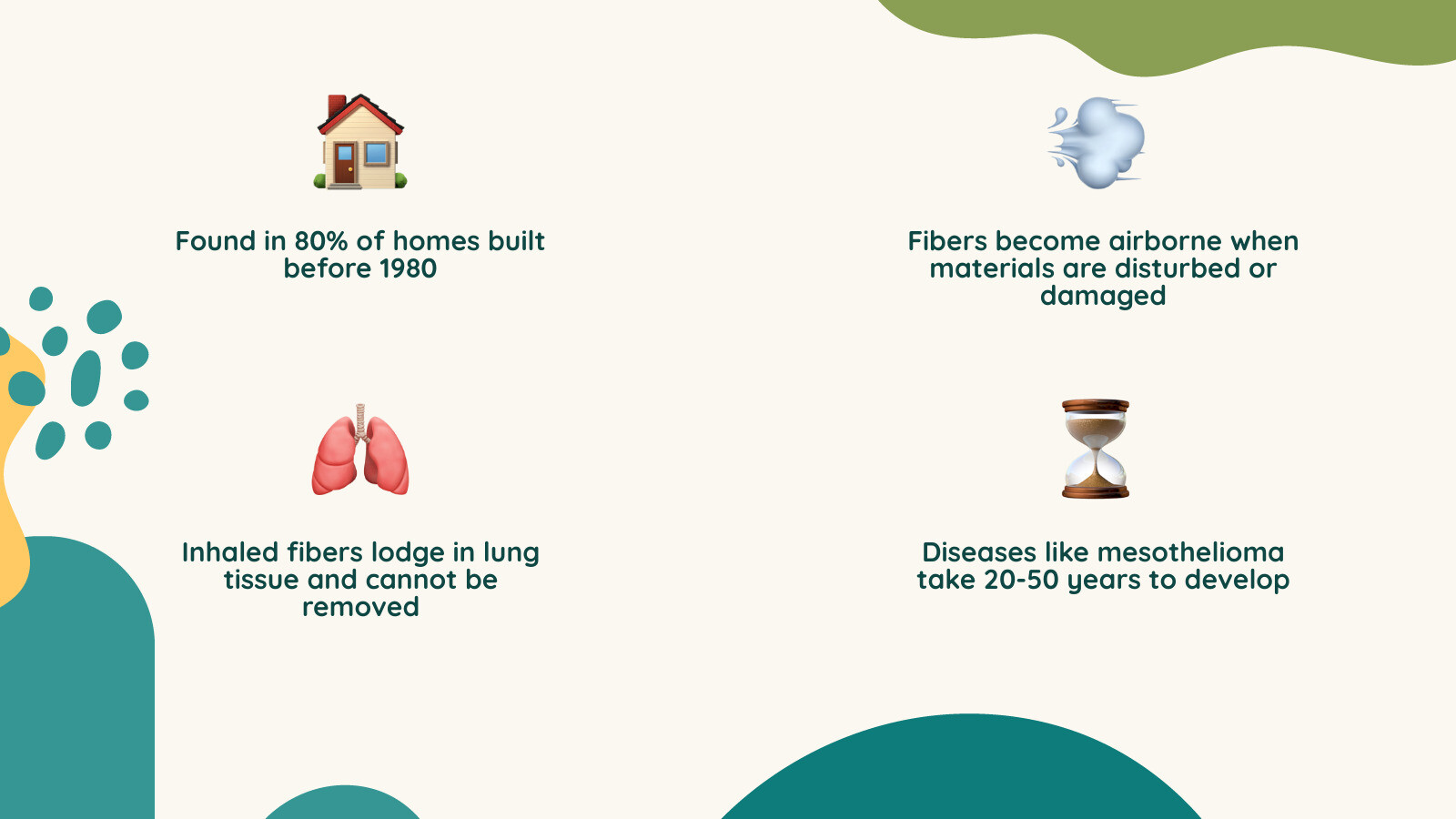
If your home was built before 1980, there’s a real chance asbestos-containing materials are present somewhere inside it. And here’s the critical part: they may be completely harmless right now — but the moment those materials are cut, scraped, sanded, or disturbed, microscopic fibers can become airborne and enter your lungs.
The danger isn’t just immediate. Asbestos-related diseases like mesothelioma, lung cancer, and asbestosis can take 20 to 30 years to develop after first exposure. By the time symptoms appear, significant damage has already been done.
That’s why understanding where asbestos hides — and how to handle it safely — is one of the most important things a homeowner can do before starting any renovation or demolition project.
I’m Stephen Wenzel, Co-Owner and Executive Vice President of Banner Environmental Services, with more than 25 years of experience in asbestos abatement and environmental remediation across Massachusetts, Rhode Island, and the Greater New England region. I’ve personally overseen hundreds of residential and commercial projects involving asbestos in homes, and this guide reflects the same practical, safety-first approach we bring to every job.
Understanding the Risks of Asbestos in Homes
When we talk about asbestos in homes, we aren’t just talking about an “old house smell” or a dusty attic. We are talking about a group of six naturally occurring minerals that were once the darlings of the construction industry. Why? Because they are incredibly strong, fire-resistant, and excellent insulators. Unfortunately, those same properties make them a nightmare for the human body.
The health hazards associated with asbestos are well-documented by organizations like the CDC. When Asbestos-Containing Materials (ACMs) are disturbed, they break down into microscopic fibers. These fibers are so small they can’t be seen by the naked eye, but they are sharp and durable. Once inhaled, they can lodge deep in the lung tissue or the lining of the chest and abdomen.
The most frightening aspect is the latency period. You won’t start coughing the day after exposure. Instead, symptoms typically appear 15 to 30 years later. Chronic exposure can lead to:
- Mesothelioma: A rare and aggressive cancer of the lining of the chest or abdominal cavity. Asbestos is the number one cause of this disease.
- Lung Cancer: While many things cause lung cancer, asbestos exposure significantly increases the risk.
- Asbestosis: A non-cancerous but serious respiratory disease where the lungs develop permanent scarring. This makes it difficult for oxygen to enter the bloodstream.
- Pleural Plaques: Thickening of the membranes surrounding the lungs.
It is a common myth that you need “heavy” exposure to get sick. While it’s true that about 20% of heavily exposed workers develop conditions, health experts like those at NIOSH state that there is no known safe level of exposure. Even short-term, high-intensity exposure—like a weekend DIY project where you sand down an old popcorn ceiling—can be enough to cause future disease.
We also have to discuss the synergistic effects of smoking. If you are a smoker and you are exposed to asbestos in homes, your risk of developing lung cancer doesn’t just double; it skyrockets. Research shows that almost all known cases of asbestos-related lung cancer occurred among smokers who were also exposed to the mineral.
This is why we tell our neighbors in Boston, Providence, and across New England: Don’t Put Family at Risk: Improper Asbestos Removal is never worth the cost savings.
Identifying Asbestos in Homes
How do you know if your home has it? The short answer is: you usually don’t. You cannot identify asbestos simply by looking at a material. Unless it is clearly labeled (which is rare in residential settings), the only way to be sure is through laboratory analysis.
However, we can look at manufacturing dates as a primary clue. If your home was built before the 1980s, you should assume it contains some form of asbestos until proven otherwise. In some cases, homes built as late as the early 1990s in New England may still have legacy products installed.
When assessing your home, we categorize materials into two types:
- Friable Materials: These are the most dangerous. A friable material is one that can be crumbled, pulverized, or reduced to powder by hand pressure when dry. Think of old pipe insulation or “fluffy” attic insulation. These release fibers into the air very easily.
- Non-Friable Materials: These are “bound” materials where the asbestos is locked into a hard matrix, like vinyl floor tiles or cement siding. These are generally safe unless they are sanded, sawed, or broken.
If you aren’t sure, check out our guide on How to Tell if Insulation is Asbestos.
Common Locations for Asbestos in Homes
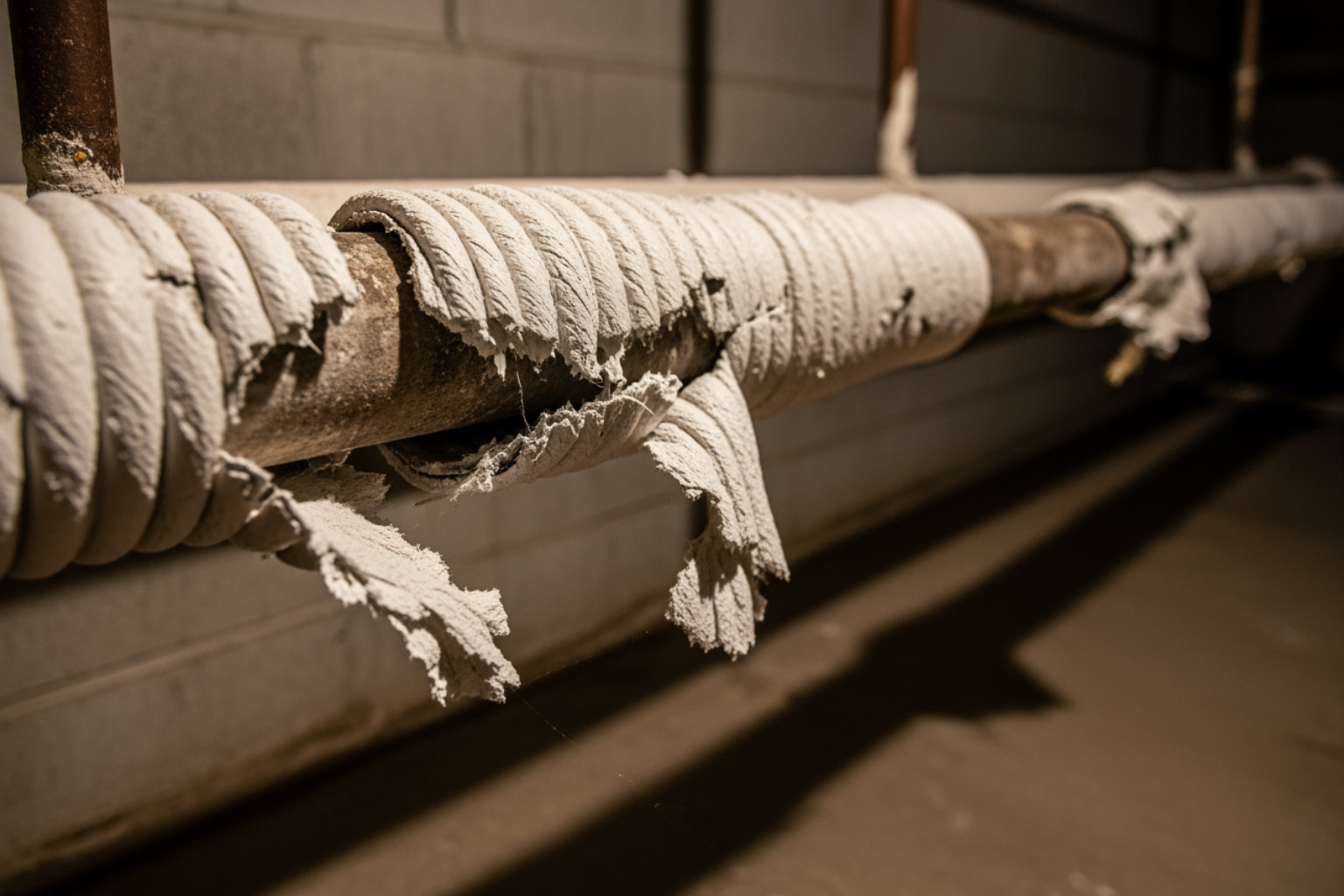
In our 25+ years serving New England, we’ve found asbestos in homes in some truly surprising places. It was used in over 3,000 different building products. Here are the “usual suspects”:
- The Basement: This is often “ground zero” for asbestos. You’ll find it in Asbestos Basement settings as insulation on steam pipes, boilers, and furnace ducts. It often looks like white “corrugated” paper or a chalky plaster wrap around “elbows” in the piping.
- Flooring: Old vinyl floor tiles, especially the 9×9 inch variety (though 12×12 can also contain it), often have asbestos in the tile itself and the black “mastic” adhesive used to stick them down.
- Ceilings: The classic “popcorn” or textured ceiling used between the 1950s and 1970s is a major culprit.
- Attics: Asbestos Abatement/Vermiculite is a common issue. Vermiculite is a pebble-like insulation that often contains tremolite asbestos. If you see silver-gold or brown pebble-like material in your attic, do not disturb it.
- Walls: Asbestos was frequently added to joint compound (the “mud” used on drywall seams) and plaster.
- Exterior: Asbestos Siding (often called Transite) and roofing shingles are common in older New England neighborhoods. These are non-friable and generally safe if left alone, but they become a hazard during demolition.
- Windows: Many homeowners forget about Asbestos Window Glazing. The old, brittle putty used to hold glass panes in place often contains fibers.
Testing and Management Strategies
The EPA guide on protecting your family from exposure is clear: if the material is in good condition and you don’t plan to renovate, the best thing to do is leave it alone. Undisturbed asbestos is not a health risk.
However, if you are planning a renovation, or if you notice materials starting to crumble or experience water damage, you need a plan. The first step is always a professional inspection.
What is an Asbestos Survey? It’s a comprehensive walkthrough where a certified inspector identifies all suspect materials, assesses their condition, and takes samples. We recommend Asbestos Testing Services: Five Reasons to ensure you have a baseline of safety before any hammers swing.
Professional sample collection is vital. A pro will wet the material to prevent fiber release, take a small core sample, and seal the area. These samples are then sent to NVLAP-accredited laboratories. The most common testing method is Polarized Light Microscopy (PLM), which uses specific light wavelengths to identify the type and percentage of asbestos present.
Once you have your results, you have three main paths:
| Strategy | Description | When to Use |
|---|---|---|
| Encapsulation | Coating the material with a sealant to “lock” fibers in place. | Good condition pipe or boiler insulation. |
| Enclosure | Building a permanent airtight barrier around the material. | Covering old floor tiles with new, non-asbestos flooring. |
| Removal | Complete physical extraction and disposal of the material. | Renovations, demolition, or severely damaged materials. |
When to Test for Asbestos in Homes
We often get calls from frantic homeowners in Worcester or Warwick who are halfway through a project and just realized they might have hit asbestos. To avoid that stress, you should test for asbestos in homes during these scenarios:
- Pre-Renovation/Demolition: This is the most critical time. If you are tearing down a wall, scraping a ceiling, or pulling up old floors, you must test first.
- Real Estate Transactions: If you are buying or selling a home in New England, an Asbestos Abatement/Survey can provide peace of mind and prevent legal headaches down the road.
- Water or Storm Damage: If a pipe bursts or a roof leaks, it can cause asbestos-containing plaster or insulation to crumble and become friable.
- Crumbling Materials: If you notice “dust” or debris near old pipes or furnace ducts, it’s time to call in a pro.
Professional Abatement vs. DIY Risks
We can’t stress this enough: do not try to remove asbestos yourself. While some states have “owner-occupied” exceptions, it is incredibly dangerous. Asbestos Removal: Right & Wrong often comes down to the equipment used.
A homeowner with a shop vac is a recipe for disaster. A regular vacuum will simply suck up the microscopic fibers and blast them back out through the exhaust, contaminating your entire house.
When you hire a professional for Asbestos Abatement/Removal, here is what the process looks like:
- Containment: We build an airtight “bubble” using heavy plastic sheeting and negative air pressure machines. This ensures no dust escapes the work area.
- Wetting Agents: We use “amended water” to keep the materials wet. Wet fibers can’t fly.
- HEPA Filtration: We use specialized high-efficiency particulate air (HEPA) vacuums and air scrubbers that are 99.97% effective at catching tiny fibers.
- PPE: Our team wears full-body suits and dual-cartridge respirators.
- Professional Disposal: Asbestos is hazardous waste. It must be sealed in leak-proof containers, labeled, and taken to a specific permitted landfill.
To learn more about the specifics, read Professional Asbestos Removal: How It Works.
Legal Requirements and Professional Hiring
Navigating the legalities of asbestos in homes can be tricky. In the New England area, regulations are strict to protect public health. This includes OSHA compliance for workers and EPA NESHAP regulations for the environment.
In Massachusetts and Rhode Island, for example, there are specific state permits and notification requirements that must be filed before work begins. If you’re doing a demolition in New Hampshire, you may need to notify the NHDES at least 10 days in advance, even if no asbestos was found.
When hiring, look for:
- Accreditation: Ensure the company is licensed in your specific state (MA, RI, NH, etc.).
- Certification: Look for DCAMM certification in Massachusetts or WBE (Woman Business Enterprise) status, which shows a commitment to professional standards.
- Conflict of Interest Awareness: Ideally, the firm that tests your home should not be the same firm that removes it, or at the very least, they should provide a clear, transparent separation of services to ensure you aren’t paying for unnecessary work.
- Insurance: Ensure they carry specific pollution liability insurance.
Whether you need Asbestos Abatement in a historic home in Boston or Asbestos Floor Tile Abatement Brighton, always verify their credentials first.
Frequently Asked Questions about Residential Asbestos
Is it safe to leave undisturbed asbestos in place?
Yes. If the material is in good, undamaged condition and is located in an area where it won’t be bumped, stepped on, or disturbed, it is generally safer to leave it alone than to try and remove it. The danger only arises when fibers are released into the air. We recommend regular visual monitoring. If you see a pipe wrap starting to fray or floor tiles cracking, then you need to take action.
For homeowners in places like Northbridge, we often handle Residential Vermiculite Removal in Northbridge MA because attics are high-traffic storage areas where disturbance is likely.
How much does asbestos testing and removal cost?
While we don’t provide specific quotes without seeing a job, the cost of asbestos in homes management depends on several factors:
- Number of samples: Labs charge per sample analyzed.
- Square footage: Larger areas of flooring or siding require more labor and disposal volume.
- Accessibility: Removing Vermiculite Removal Concord from a cramped attic is more labor-intensive than removing tiles from an open basement.
- Disposal fees: Hazardous waste landfills charge by weight or volume.
Can I use a DIY test kit for my home?
You can buy these at hardware stores, but we don’t recommend them. The risk isn’t just the accuracy of the lab; it’s the sampling process itself. If you don’t know how to properly “wet” and seal a sample area, you could release fibers into your breathing zone just by trying to test it. Furthermore, many DIY kits have hidden lab fees that make them nearly as expensive as a professional consultation without the peace of mind.
If you are dealing with other legacy issues, like Removing Urea Formaldehyde Foam Insulation Lincoln MA, it’s always better to have professional oversight to ensure the job is done right the first time.
Conclusion
Dealing with asbestos in homes can feel overwhelming, but it doesn’t have to be. By understanding the risks, knowing where the material hides, and respecting the “leave it alone” rule for undamaged materials, you can keep your family safe.
At Banner Environmental Services, we bring over 25 years of New England expertise to every project. Whether you are in Franklin, MA, Providence, RI, or Nashua, NH, our licensed professionals are ready to help you navigate the complexities of Asbestos Abatement/Testing. We are WBE/DCAMM certified and committed to the highest standards of safety and compliance.
Don’t guess when it comes to your health. If you suspect asbestos in your home, reach out to us today for a professional consultation. We’ll help you breathe easier.