
Understanding Asbestos and Its Serious Health Threats
Asbestos inspection and testing is the process of identifying, sampling, and laboratory-analyzing materials in a building to determine whether they contain asbestos fibers — and if so, at what concentration and risk level.
Here’s what you need to know at a glance:
| Question | Quick Answer |
|---|---|
| What is it? | A certified inspector visually surveys a building, collects material samples, and sends them to an accredited lab for analysis |
| Who needs it? | Owners of buildings built before the 1980s, anyone planning renovations or demolition, and buyers or sellers of older properties |
| Is it required? | Sometimes — EPA and OSHA mandate it before many renovation and demolition projects; schools have strict federal inspection schedules |
| Can you do it yourself? | No — disturbing suspect materials without proper equipment releases dangerous fibers |
| How long does it take? | On-site inspections typically take 1–2 hours; lab results come back within 2–5 business days |
| What happens if asbestos is found? | A licensed professional will recommend management, encapsulation, or safe removal depending on the material’s condition |
Asbestos was used in thousands of building materials for most of the 20th century — from insulation and floor tiles to roofing and textured coatings. It was prized for its heat resistance and durability. But when asbestos-containing materials are disturbed, they release microscopic fibers that can lodge permanently in lung tissue, leading to serious and often fatal diseases including mesothelioma, lung cancer, and asbestosis.
The challenge? You cannot see, smell, or feel asbestos fibers in the air. That’s what makes professional inspection and testing so critical — and so different from most other home or building hazards.
I’m Stephen Wenzel, Co-Owner and Executive Vice President of Banner Environmental Services, with over 25 years of hands-on experience in asbestos inspection and testing, abatement planning, and environmental remediation across Massachusetts, Rhode Island, and the greater New England region. In this guide, I’ll walk you through everything you need to know to protect your property and the people in it.
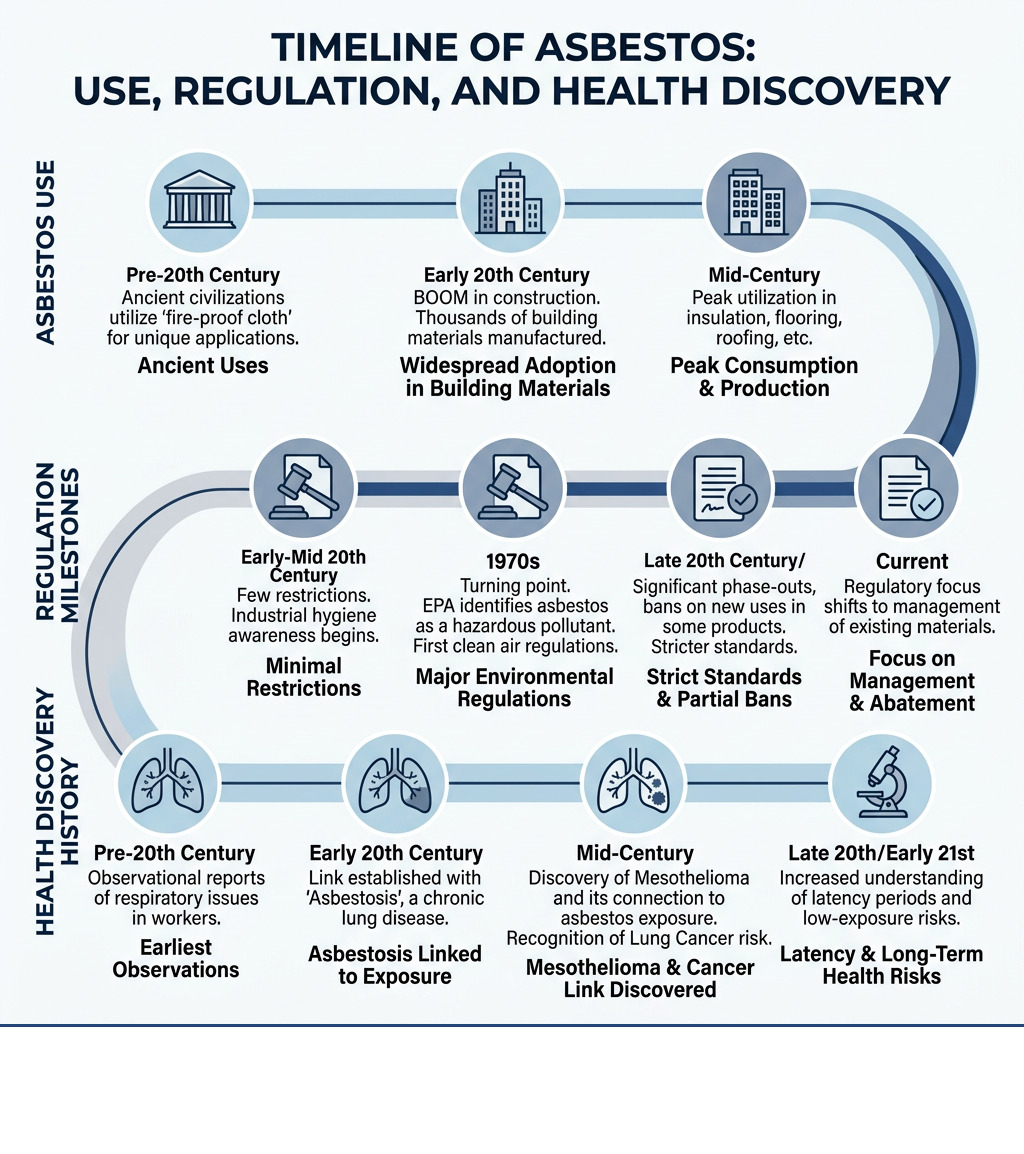
To understand why we take asbestos inspection and testing so seriously, we first have to look at what this material actually is. Asbestos isn’t a man-made chemical; it is a group of six naturally occurring silicate minerals. In the construction world, we primarily deal with three types:
- Chrysotile (White Asbestos): The most common type, often found in roofs, ceilings, walls, and floors of homes and businesses.
- Amosite (Brown Asbestos): Frequently used in cement sheets and pipe insulation.
- Crocidolite (Blue Asbestos): Known for its high heat resistance, commonly used to insulate steam engines and in some spray-on coatings.
In our industry, we categorize these as either “friable” or “non-friable.” This distinction is huge for safety. Friable materials can be crumbled or reduced to powder by hand pressure when dry (think of old, fluffy pipe insulation). These are high-risk because they release fibers easily. Non-friable materials, like vinyl floor tiles or cement siding, bind the fibers in a hard matrix. They are generally safer unless they are sanded, sawed, or smashed during a renovation.
The health risks are unfortunately well-documented. When these microscopic fibers are inhaled, they can become trapped in the lungs or the lining of the chest and abdomen. Because the body cannot break them down, they cause inflammation and scarring over time. This leads to:
- Mesothelioma: A rare and aggressive cancer of the lung or abdominal lining, almost exclusively caused by asbestos exposure.
- Lung Cancer: Asbestos exposure significantly increases the risk, especially for smokers.
- Asbestosis: A chronic, non-cancerous lung disease caused by scarring of lung tissue.
One of the scariest parts of asbestos exposure is the latency period. It can take 10, 20, or even 50 years after exposure for symptoms to appear. This is why we treat every asbestos-containing-material with extreme caution, regardless of how long it has been in the building. For those interested in the technical side of how we measure these risks, the scientific research on asbestos fiber analysis provides the backbone for the safety standards we follow today.
When to Schedule an Asbestos Inspection and Testing
We often get asked, “If my house looks fine, do I really need a test?” The answer usually depends on your plans for the property.
If your home or commercial building was constructed before the 1980s, you should assume asbestos is present until proven otherwise. While the mid-70s saw a sharp decline in use, many stockpiled materials were used well into the 1980s.
Specific triggers for asbestos inspection and testing include:
- Planned Renovations: Before you knock down a wall or scrape a “popcorn” ceiling, you need to know what’s inside.
- Demolition Projects: Most states in New England, including Massachusetts and New Hampshire, require a full survey before any structure is demolished.
- Visible Damage: If you see crumbling pipe wrap in your basement or cracked floor tiles, the material is now friable and potentially dangerous.
- Real Estate Transactions: Many buyers today insist on an inspection to avoid inheriting a massive abatement bill.
In many jurisdictions, disclosure laws require sellers to notify buyers of any known asbestos. If you aren’t sure what you’re looking at, our guide on how to tell if insulation is asbestos is a great starting point for homeowners.
When is Asbestos Inspection and Testing Mandatory?
In many cases, testing isn’t just a “good idea”—it’s the law. The EPA and OSHA have strict standards to protect both the public and workers.
For example, in New Hampshire, the NHDES requires notification at least 10 business days before any abatement or demolition work begins. In schools, the requirements are even stricter under AHERA (Asbestos Hazard Emergency Response Act). Schools must:
- Perform an initial inspection to identify all ACM.
- Conduct re-inspections every three years.
- Perform periodic surveillance every six months to check the condition of known asbestos.
Whether you are managing a commercial facility or a local elementary school, staying compliant is about more than avoiding fines; it’s about public safety. You can learn more about the specifics of these requirements on our asbestos survey page.
Is Asbestos Still a Concern in Newer Homes?
A common misconception is that homes built after 1990 are “safe.” While the risk is significantly lower, it isn’t zero. Even today, asbestos is not completely banned in the United States. Some products, like roof shingles, cement siding, and certain automotive parts, may still contain small amounts of asbestos. Additionally, “new” homes built in the 90s might have utilized older stockpiled materials or imported products that didn’t meet domestic standards. This is why a professional asbestos survey is still a wise investment for any major project.
The Professional Asbestos Inspection and Testing Process

When we arrive at a property for asbestos inspection and testing, we follow a standardized, highly regulated process. You can’t just “eyeball” asbestos; it requires a combination of field expertise and laboratory science.
The process typically involves:
- Site Walkthrough: A certified inspector identifies all “suspect” materials.
- Bulk Sampling: The inspector carefully removes small pieces of the material. To ensure accuracy, we follow the “3-5-7” rule for surfacing materials (taking more samples for larger areas) to ensure we don’t miss a “hot spot.”
- Laboratory Analysis: Samples are sent to an accredited lab. In the eyes of the law, a material is defined as Asbestos-Containing Material (ACM) if it contains greater than 1% asbestos.
We provide a detailed report that outlines exactly where the asbestos is, what condition it’s in, and how to manage it. You can see a full breakdown of our testing services here.
Common Asbestos Testing Methods
Not all tests are the same. Depending on whether we are testing a piece of floor tile or the air you are breathing, we use different scientific methods:
- Polarized Light Microscopy (PLM): The most common method for bulk samples (like insulation or drywall). It uses polarized light to identify the specific mineral crystals.
- Transmission Electron Microscopy (TEM): The “gold standard.” It can detect the tiniest fibers that other methods miss. This is often required for school “clearance” tests after a removal project.
- Phase Contrast Microscopy (PCM): Primarily used for air monitoring on job sites to ensure fibers aren’t escaping the work area.
The Cost of Asbestos Inspection and Testing
While we don’t list specific prices due to the unique nature of every building, it’s helpful to understand what factors into the cost. A single-sample test for a homeowner is much different than a comprehensive survey for a 50,000-square-foot warehouse.
Residential single-sample testing
- Includes testing one suspect material, such as a floor tile or ceiling texture
- Cost drivers often include lab fees, travel, and how many layers are in the material
Full residential survey
- Includes a broader inspection of the home, often before renovation or repair work
- Cost drivers usually include square footage and how easy the suspect materials are to access
Commercial or industrial survey
- Includes a more complete inspection and reporting process to support OSHA and EPA compliance
- Cost drivers typically include building size and the number of homogeneous material areas that need sampling
Air clearance testing
- Includes post-removal sampling to confirm the area is safe for re-occupancy
- Cost drivers often include the number of air samples and whether faster lab turnaround is needed
Generally, you are paying for the inspector’s time, the laboratory’s specialized equipment, and the legal documentation provided in the final report.
What to Expect if Asbestos is Found in Your Property
If the lab results come back positive, don’t panic. Finding asbestos doesn’t always mean you have to spend thousands of dollars on removal.
Based on our risk assessment, we might recommend:
- Management in Place: If the material is in good condition and won’t be disturbed, the safest option is often to leave it alone and monitor it.
- Encapsulation: Treating the material with a sealant that binds the fibers together so they can’t become airborne.
- Enclosure: Building a permanent airtight barrier around the material.
- Professional Removal (Abatement): If the material is damaged or in the way of a renovation, it must be removed.
During removal, we use HEPA filtration, negative air pressure, and wet-stripping methods to ensure not a single fiber escapes. Once the work is done, clearance testing is performed by a third party to prove the air is safe to breathe. There are five key reasons why professional testing is the only way to ensure this peace of mind.
Frequently Asked Questions about Asbestos Detection
What are the common signs of asbestos in a building?
While laboratory testing is the only definitive way to know, there are “red flags” we look for. These include:
- Age: Anything built before 1980.
- 9×9 Floor Tiles: These are almost always asbestos-containing.
- “Popcorn” Textures: Very common in ceilings from the 60s and 70s.
- Corrugated Siding: Often found on old garages or industrial buildings.
- White Tape/Paper on Pipes: Classic “asbestos wrap” used for thermal insulation.
Why should I never attempt to test or remove asbestos myself?
We’ve seen it happen too many times: a homeowner tries to save a few dollars by “carefully” removing old insulation, only to contaminate their entire HVAC system.
- Microscopic Hazard: You can’t see the fibers you’re releasing.
- Lack of PPE: Standard dust masks do nothing to stop asbestos fibers.
- Cross-Contamination: Without negative pressure, fibers will settle on your carpets, furniture, and clothes.
- Legal Liability: If you are a landlord or business owner, DIY removal can lead to massive fines and lawsuits.
How long does the inspection and testing process take?
Most residential asbestos inspection and testing visits take between 1 and 2 hours. We collect the samples, document the locations, and secure the area. The laboratory analysis typically takes 2 to 5 business days, though “rush” options are usually available if you are in the middle of an emergency repair.
Conclusion
Asbestos is a “legacy” hazard that continues to affect property owners across New England. Whether you are in a historic home in Boston or a commercial facility in Providence, understanding the risks and the proper procedures for asbestos inspection and testing is the first step in maintaining a safe environment.
At Banner Environmental Services, we bring over 25 years of experience to every project. As a WBE and DCAMM-certified firm, we pride ourselves on a professional, transparent approach that keeps you in compliance with all OSHA and EPA standards. We serve Massachusetts, Rhode Island, and are expanding our expert services into New Hampshire, Vermont, Maine, and Connecticut.
If you suspect asbestos in your property or are planning a renovation, don’t leave it to chance. Contact us today for a professional asbestos survey and breathe easier knowing your project is in expert hands.