
Banner Environmental Service was contracted to perform asbestos abatement in Hampton, NH as part of a large-scale redevelopment effort transforming a former industrial headquarters into a modern residential community. The project centers on the adaptive reuse of an existing 100,000-square-foot building, previously home to Wheelabrator-Frye and later Fisher Scientific, with additional apartment buildings planned across the 104-acre site.
This work plays a critical early role in clearing environmental hazards so redevelopment can move forward safely, efficiently, and in full regulatory compliance.
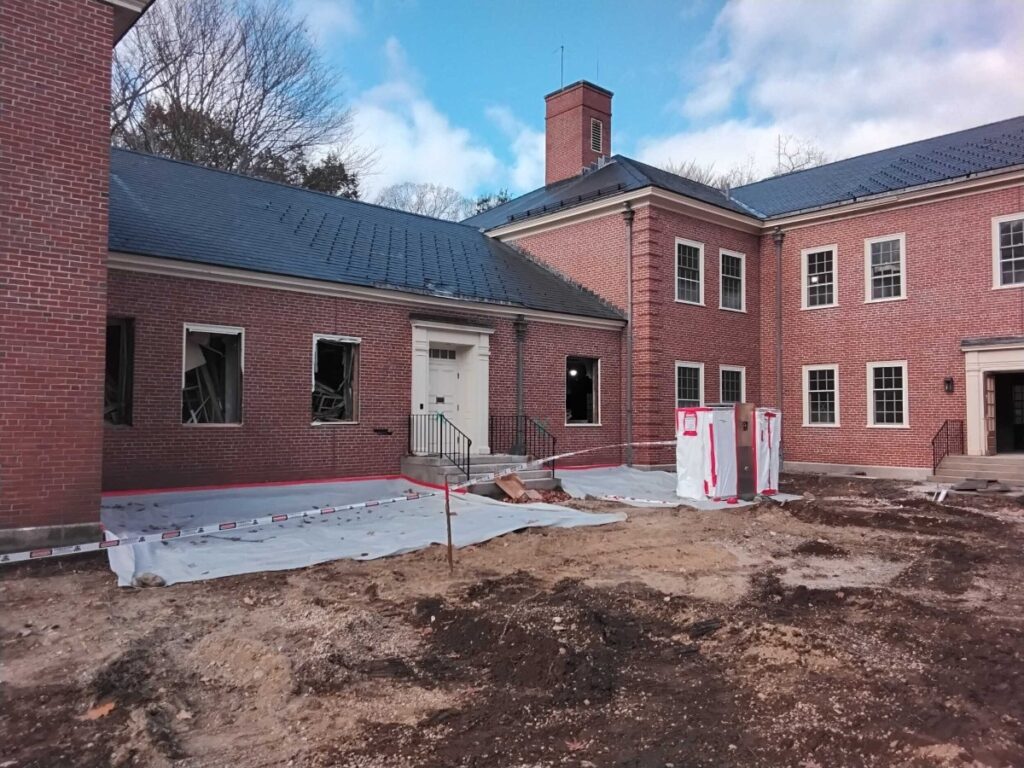
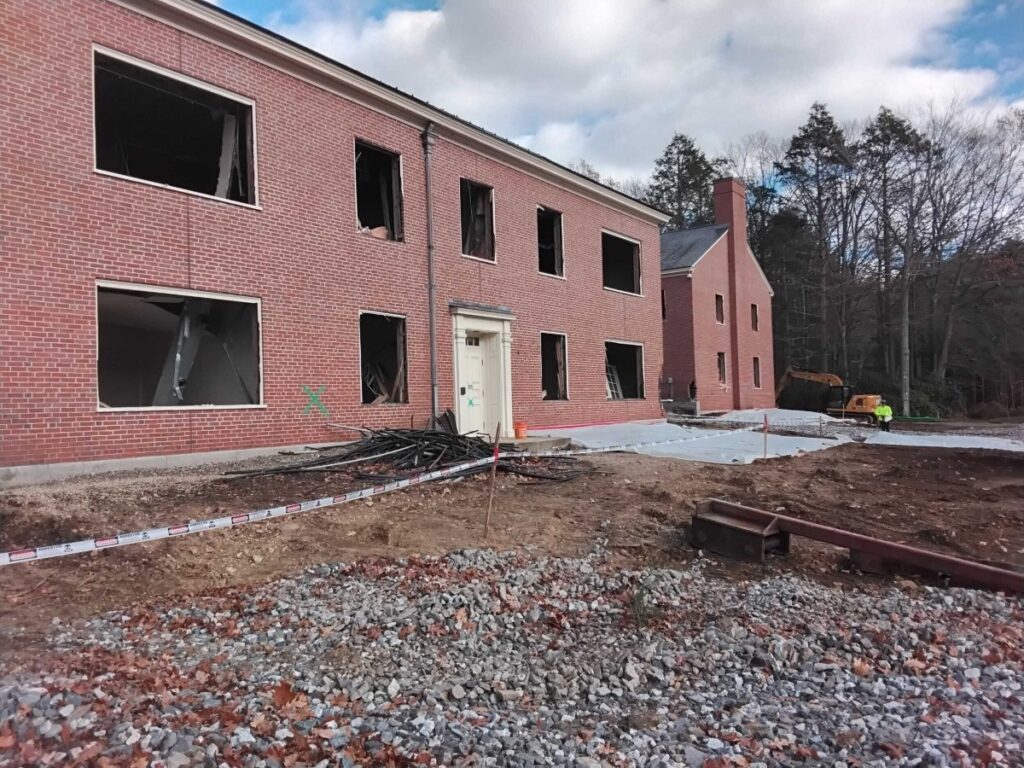
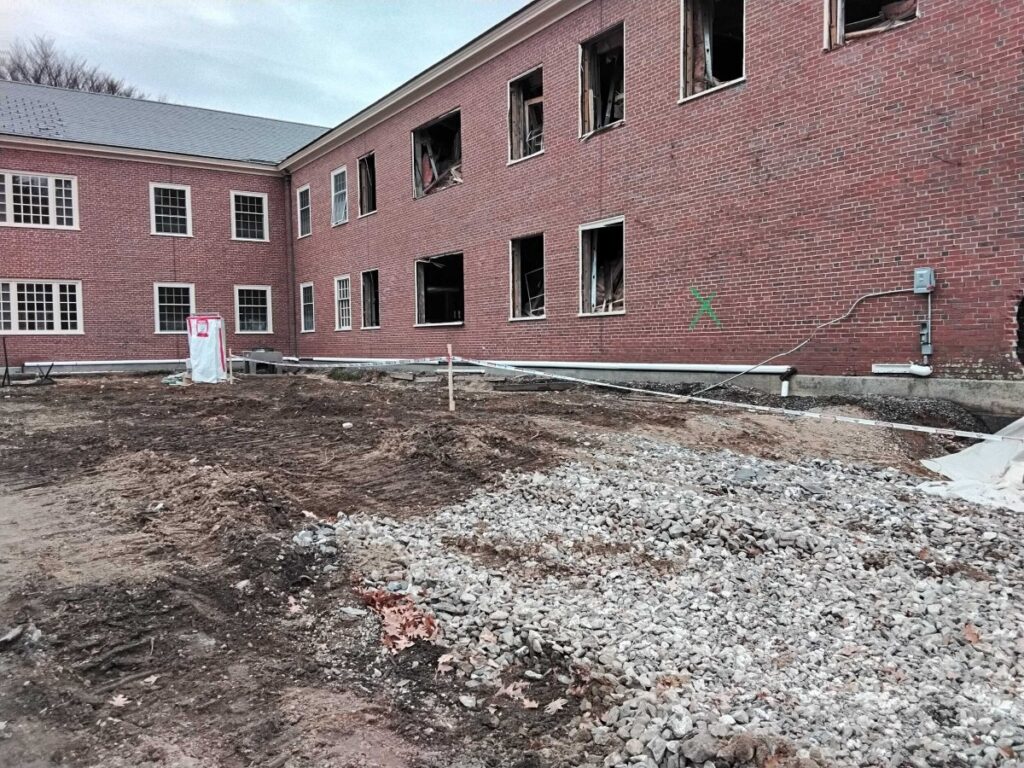
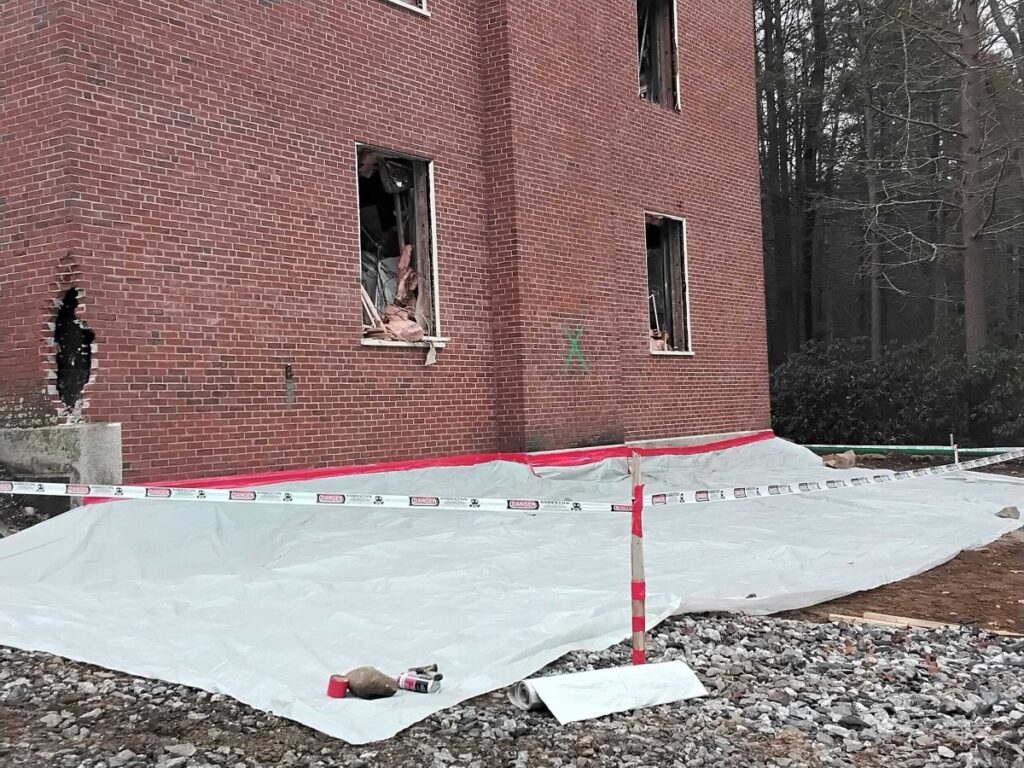
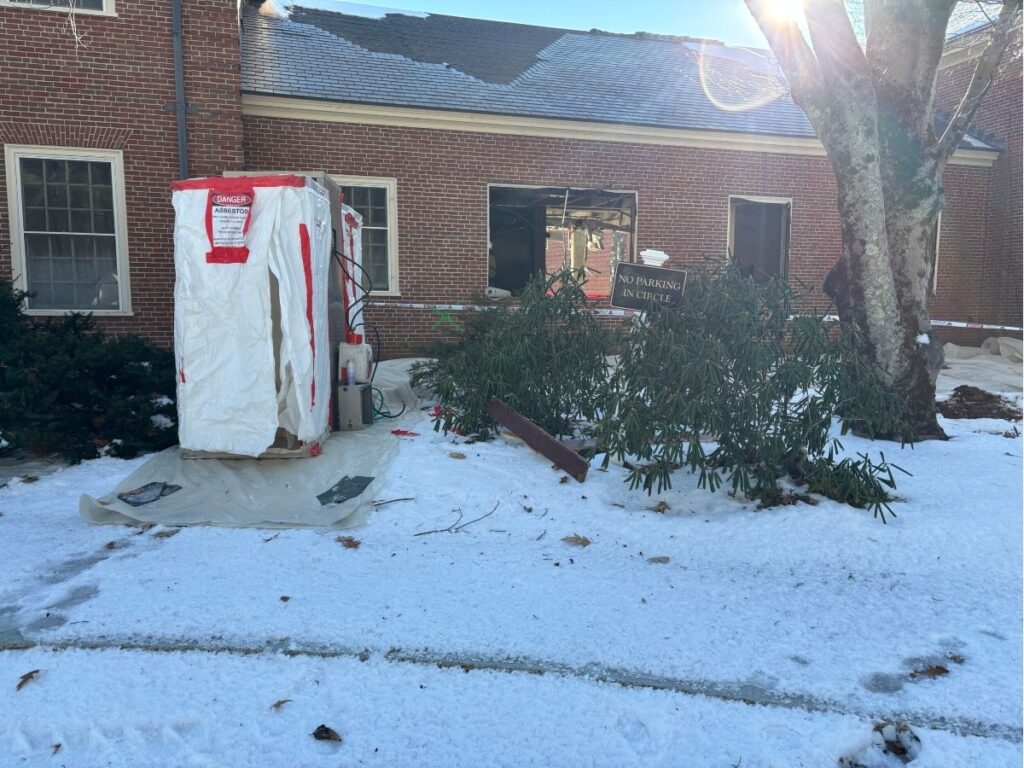
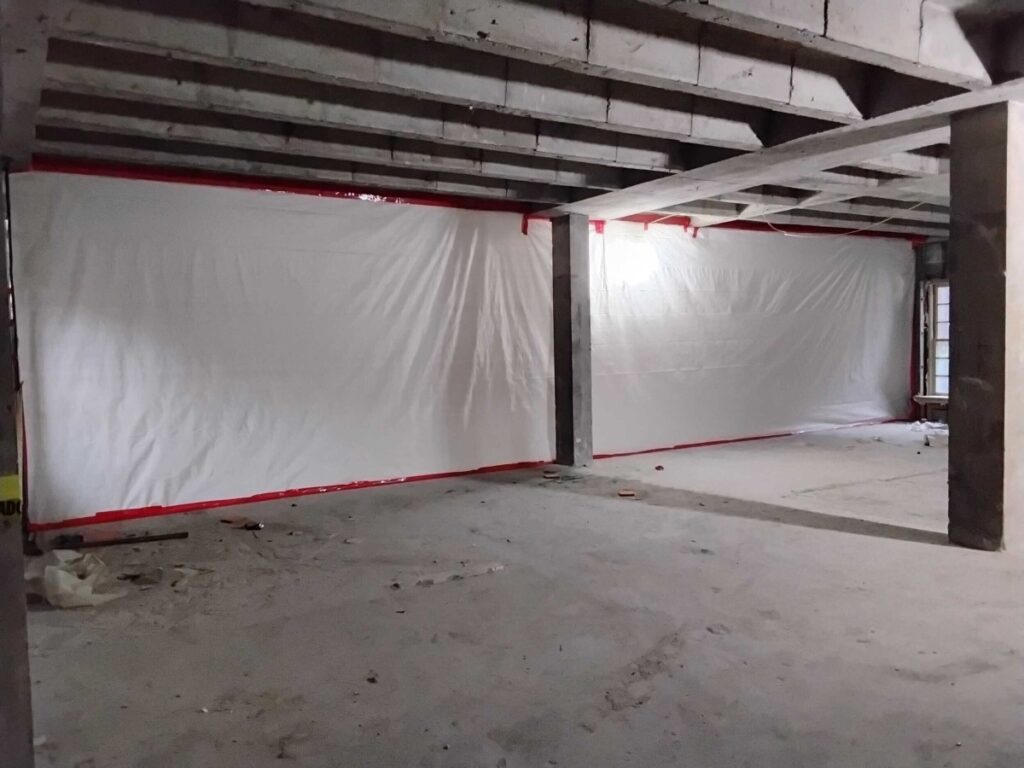
Preparing a Legacy Industrial Site for Residential Reuse
Redeveloping former industrial properties presents unique challenges—especially when asbestos-containing materials (ACM) are present in exterior construction systems. Our scope focused on safely addressing these materials while coordinating with demolition and redevelopment teams working on a tight timeline.
Before work began, we reviewed asbestos survey data and worked alongside the project’s environmental consultant to finalize a detailed abatement work plan that met New Hampshire Department of Environmental Services (NHDES) requirements.
Asbestos Abatement Scope and Work Practices in Hampton, NH
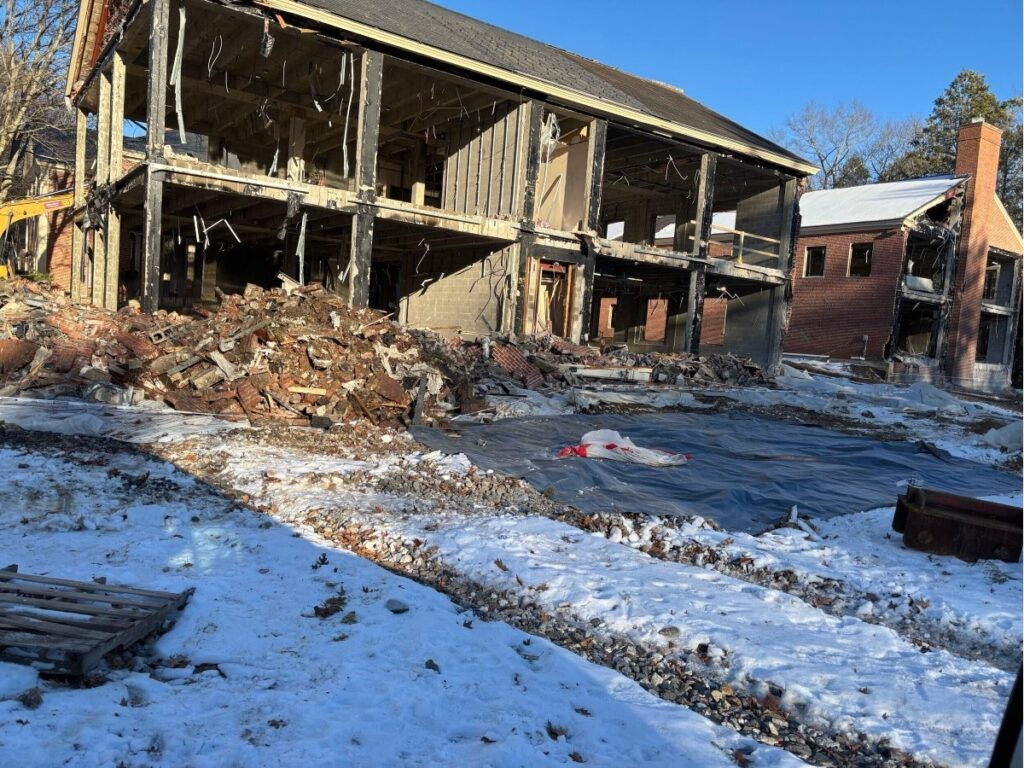
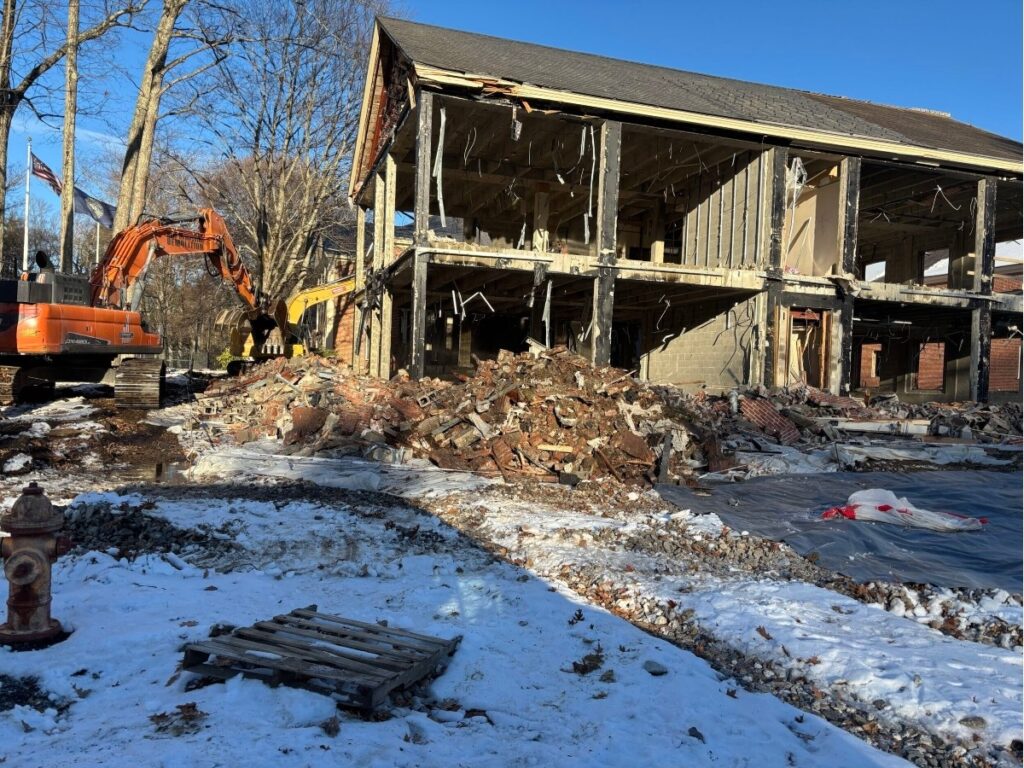
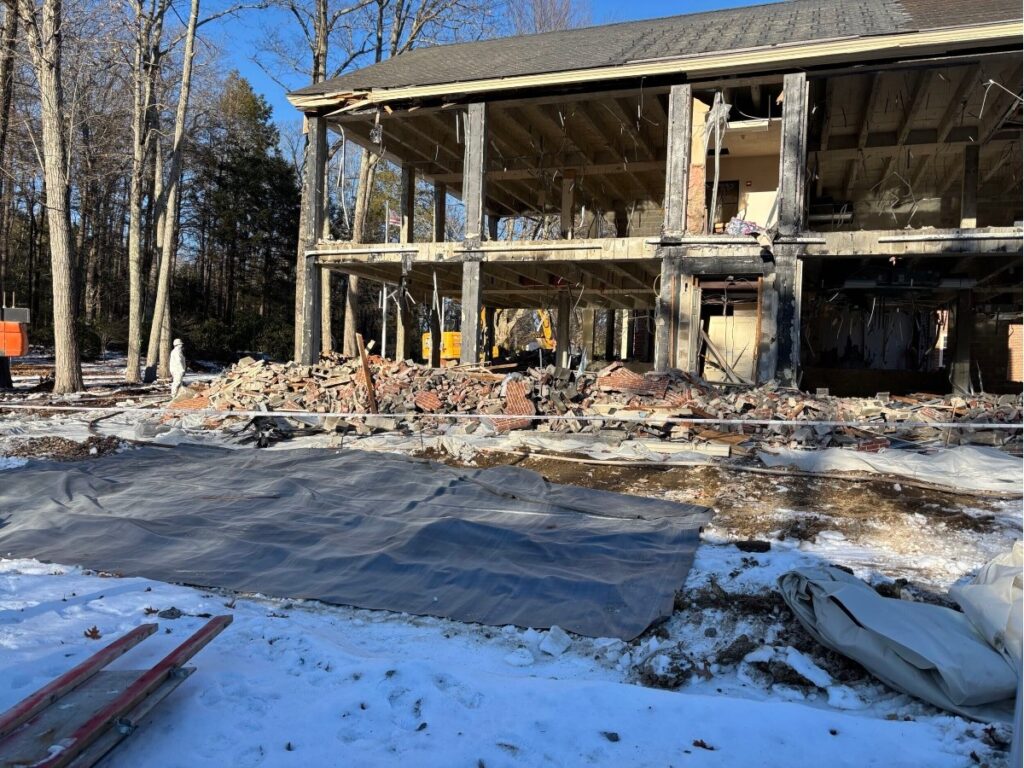
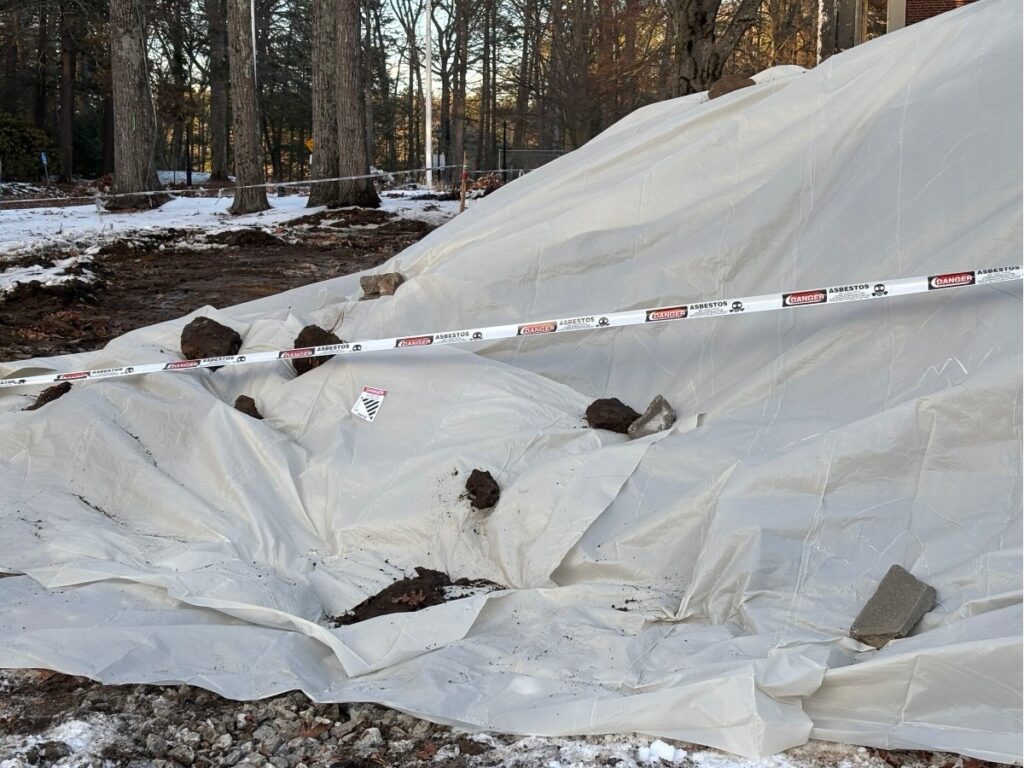
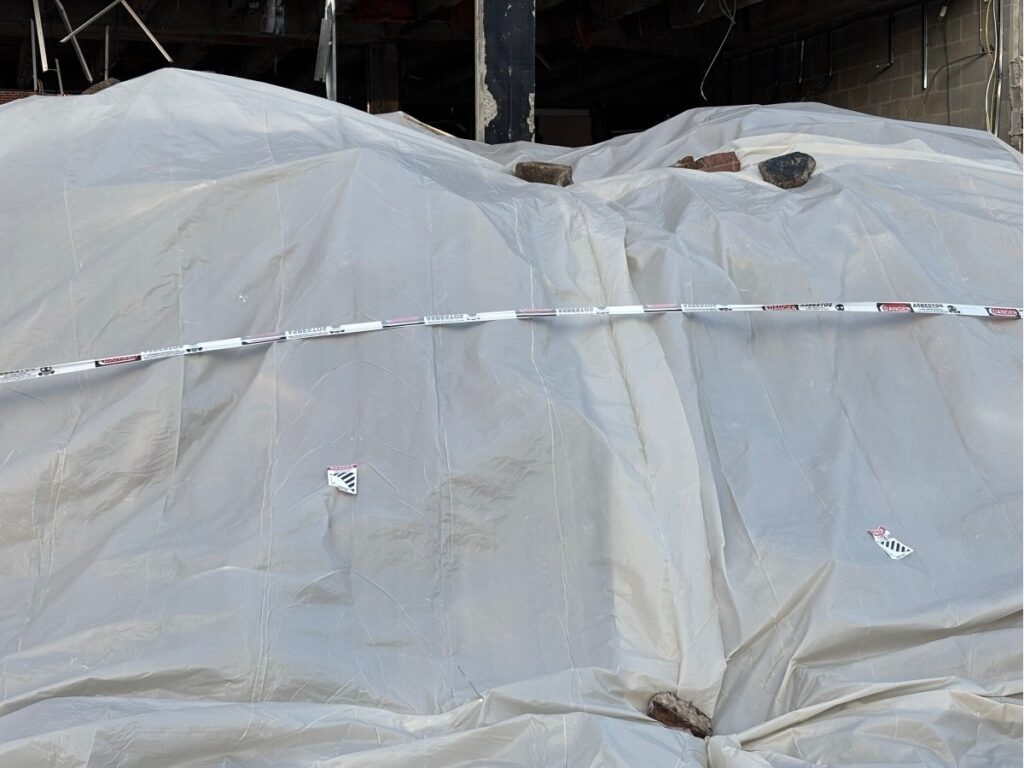
The primary focus of this phase was the removal of asbestos-containing damp proofing materials located on exterior CMU walls, brick veneer, and associated mortar systems. Additional ACM identified within the structure—including floor tile, mastic, and duct sealant—were addressed using traditional abatement methods.
Key components of the work included:
- Establishing a fully regulated asbestos work area with controlled access
- Removing asbestos-containing damp proofing from exterior masonry systems
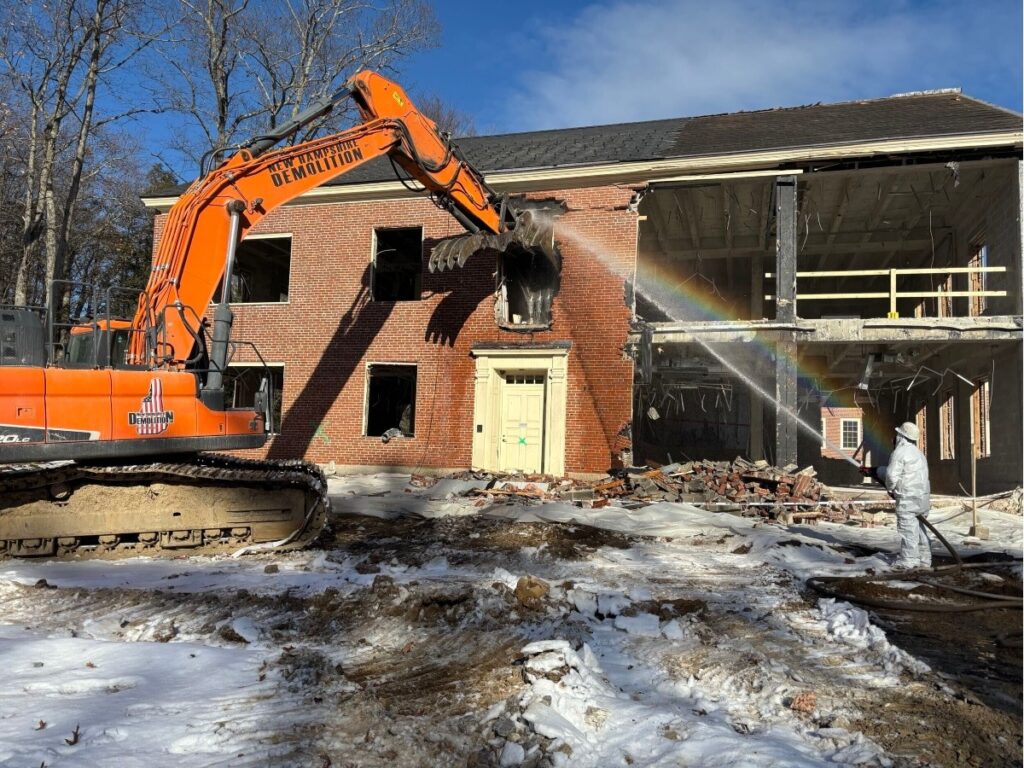
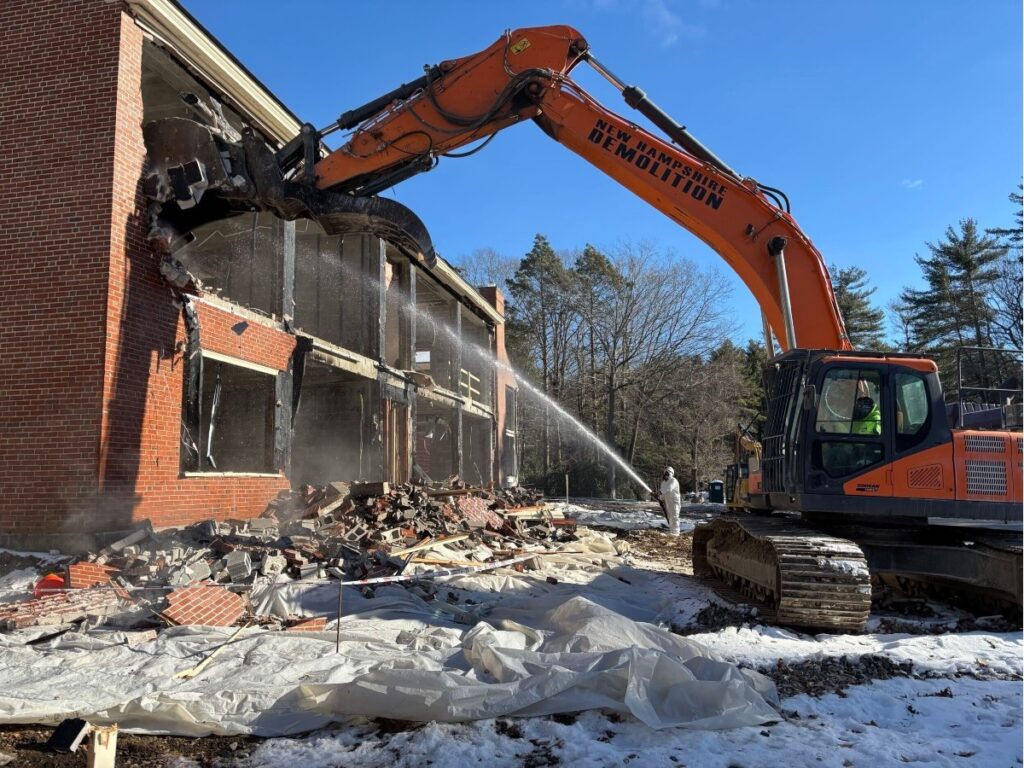
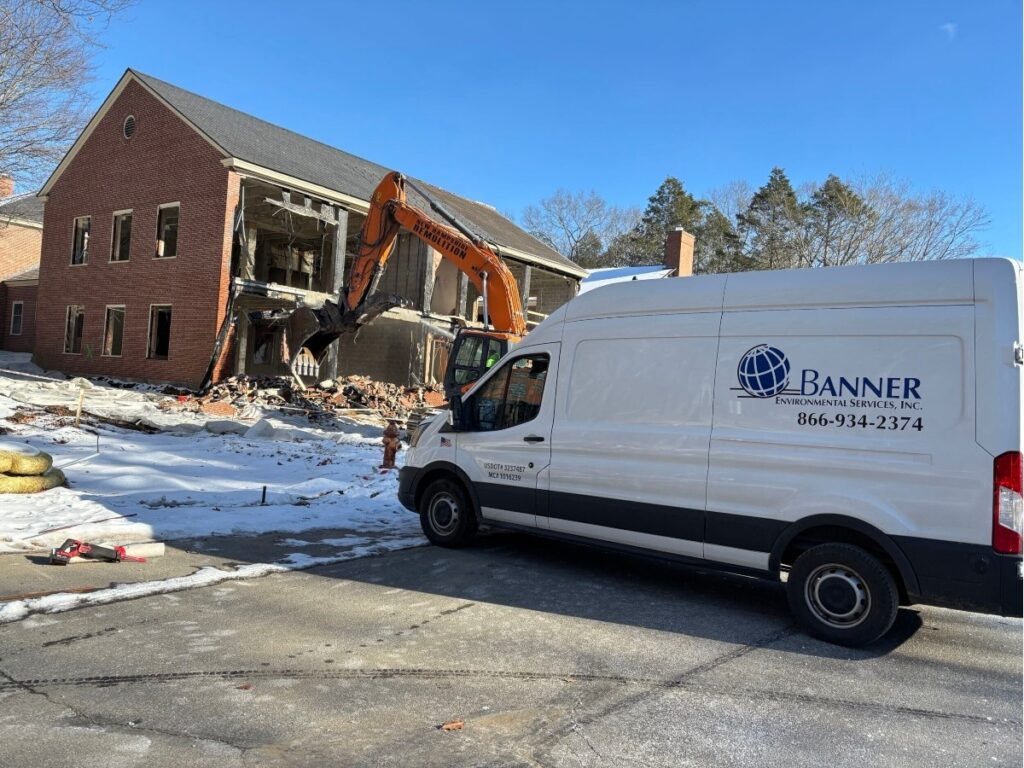
- Coordinating abatement activities with selective demolition operations
- Continuous wet methods to suppress dust and fiber release
- HEPA vacuuming and detailed cleaning of exposed structural elements
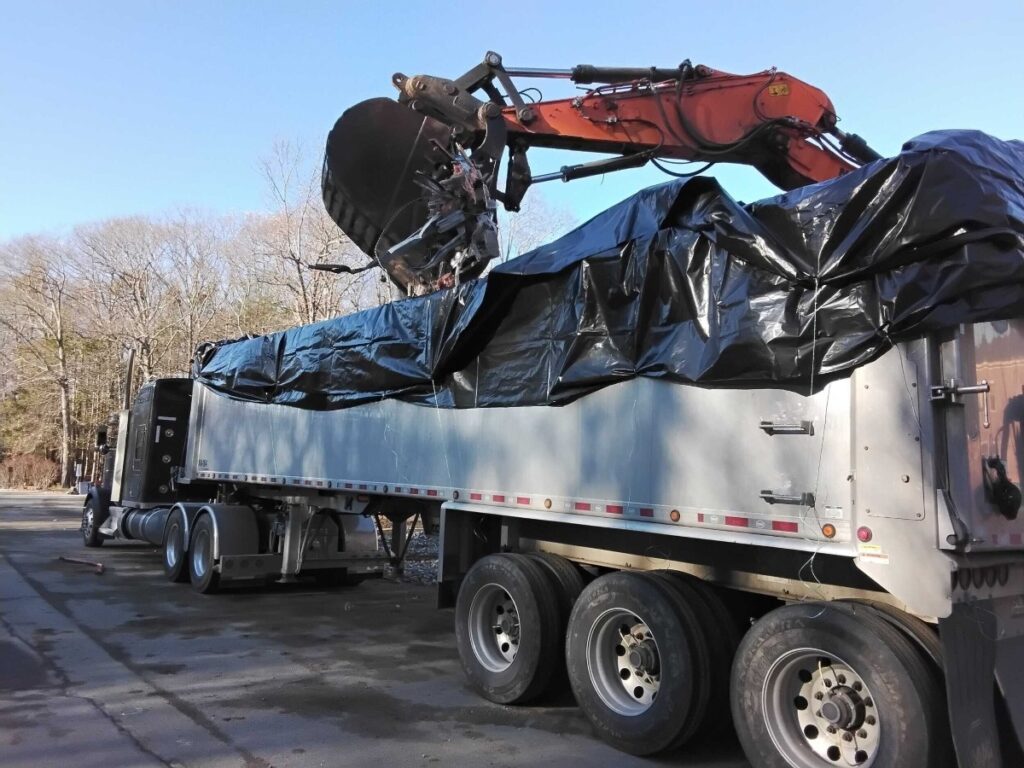
- Proper packaging, labeling, transportation, and disposal of all asbestos waste at a licensed facility
All asbestos-containing materials were handled under strict chain-of-custody procedures, with documentation maintained throughout the project.
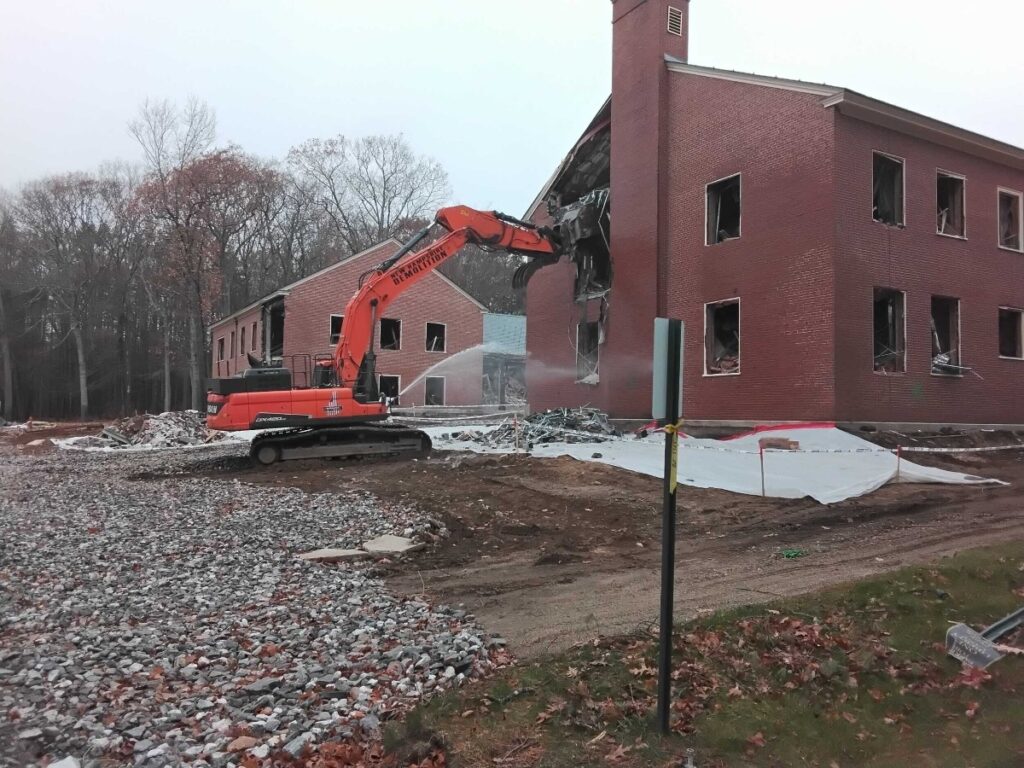
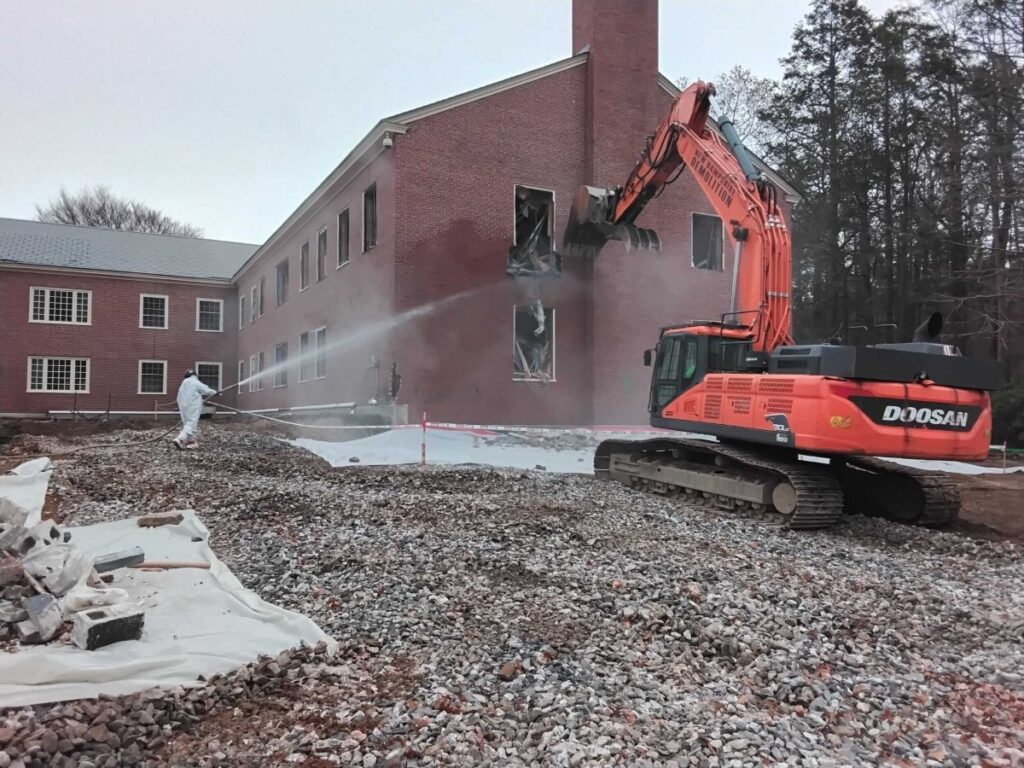
Engineering Controls, Safety, and Oversight of Asbestos Removal
Given the scale and exterior nature of the work, this project relied heavily on engineering controls rather than traditional enclosure-only methods. We implemented:
- Clearly defined regulated zones extending beyond the building footprint
- Negative exposure assessments supported by perimeter air monitoring
- Continuous water application during demolition and loading operations
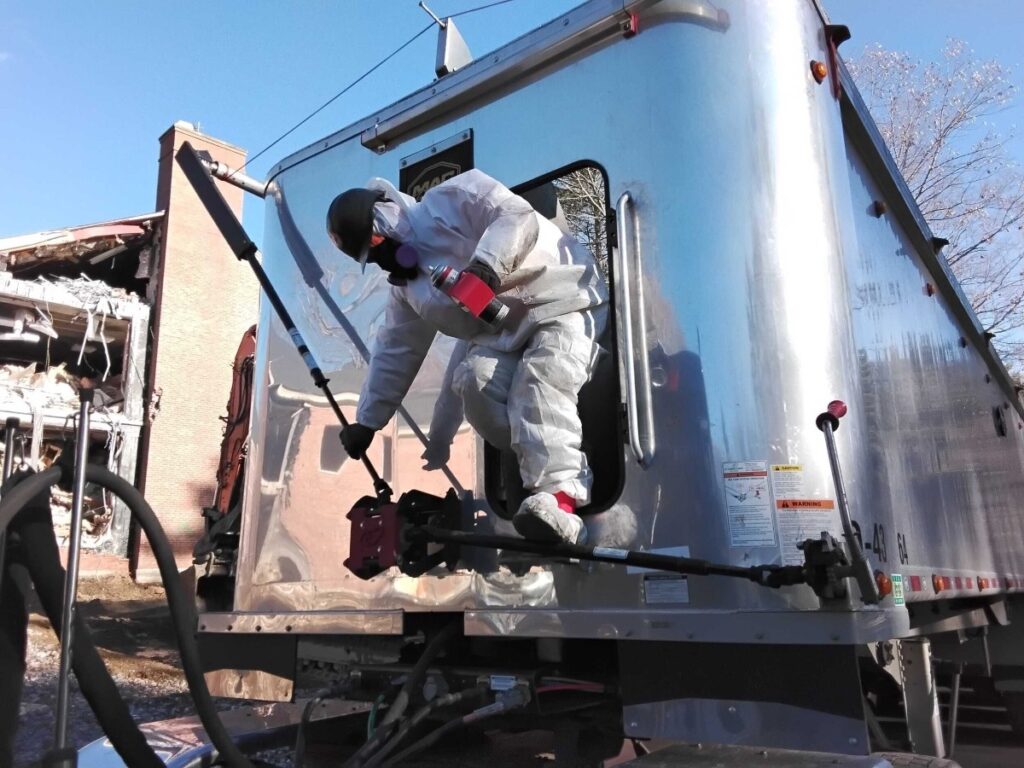
- Equipment and vehicle decontamination protocols, including lined transport vehicles
- Third-party environmental oversight and final visual clearance
Our licensed supervisors ensured OSHA, EPA, and NHDES regulations were followed at every stage.
Supporting a Larger Vision for Community Growth
This asbestos abatement phase clears the way for a significant residential transformation that will bring 248 new apartment units to the site once complete. By safely addressing legacy asbestos hazards early, we helped reduce risk, protect downstream trades, and keep redevelopment moving on schedule.
Projects like this highlight the importance of experienced abatement contractors in large adaptive reuse developments—where environmental work is foundational to long-term success.
Professional Asbestos Abatement – Moving Redevelopment Forward Safely
From early planning through final clearance, our professional asbestos abatement team remained focused on safety, compliance, and coordination. We’re proud to support projects that give new life to former industrial properties while protecting workers, future residents, and the surrounding community.
If you’re planning redevelopment or renovation at a site with known or suspected asbestos, we’re ready to help.
Contact us online or call 866-934-2374 to speak with our team.