
Introduction
Why Attic Mold Removal Is More Urgent Than You Think
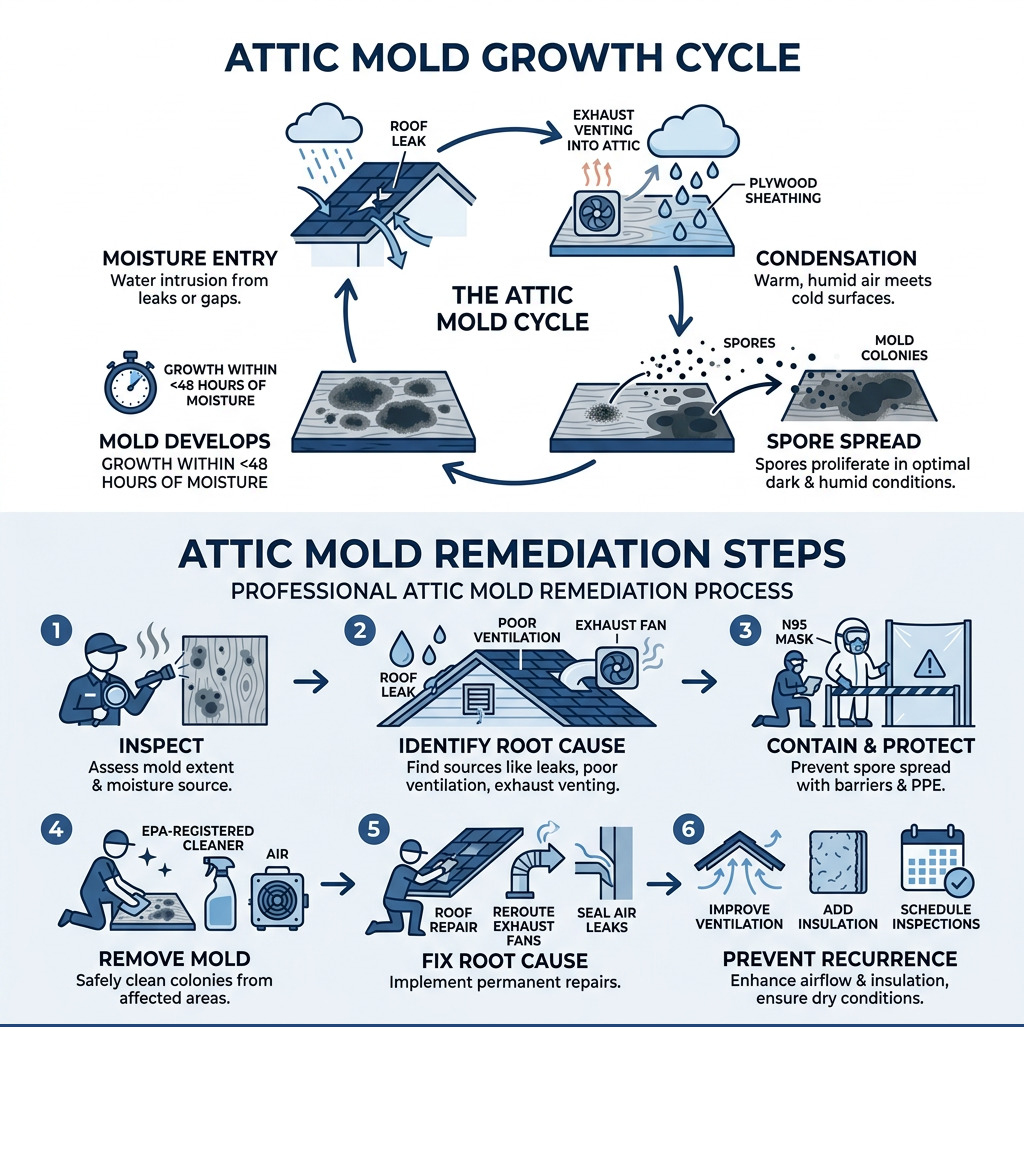
Attic mold removal is the process of safely identifying, containing, and eliminating mold colonies from your attic — and then fixing the moisture source so it doesn’t come back.
Here’s a quick overview of what the process involves:
- Inspect — Look for dark stains on plywood, musty odors, rusted nails, or frost buildup
- Identify the moisture source — Poor ventilation, roof leaks, or exhaust fans venting into the attic
- Contain and protect — Seal off the area; wear N95 mask, gloves, and goggles
- Remove the mold — Clean surfaces with EPA-registered products (DIY only for areas under 10 sq. ft.)
- Fix the root cause — Repair vents, reroute exhaust fans, seal air leaks
- Prevent recurrence — Improve ventilation, add insulation, schedule seasonal inspections
Your attic is one of the most overlooked spaces in your home. Most homeowners only go up there when something is already wrong.
That’s exactly why mold thrives there.
The attic creates near-perfect conditions for mold: it’s dark, often humid, and packed with wood — which mold feeds on. Once enough moisture is present, mold can begin growing in less than 48 hours. And because no one’s checking, it can spread for months or even years before anyone notices.
The signs are easy to miss. A faint musty smell. Some dark patches on the plywood. Maybe a few rusted nails. By the time most homeowners spot visible mold covering 15 square feet or more, the problem has usually been building for a long time.
Left untreated, attic mold doesn’t just stay in the attic. Spores can migrate through your HVAC system and into your living spaces — affecting air quality, triggering respiratory symptoms, and quietly degrading the structural integrity of your roof deck.
In New England especially, cold winters and high humidity create the ideal cycle for condensation-driven mold growth — a problem that’s both common and, when caught early, very fixable.
I’m Stephen Wenzel, Co-Owner and Executive Vice President of Banner Environmental Services, with over 25 years of experience in environmental remediation including mold remediation protocols, containment strategy, and attic mold removal across Massachusetts, Rhode Island, and the Greater New England region. In this guide, I’ll walk you through everything you need to know — from spotting the early warning signs to deciding whether a DIY approach is safe or whether it’s time to call in licensed professionals.
Understanding the Root Causes of Attic Mold Removal Needs
To solve a mold problem, you have to think like a detective. Mold is never the primary problem; it is a symptom of a moisture problem. In our decades of experience serving Massachusetts and Rhode Island, we’ve found that attic mold almost always stems from one of four “usual suspects.”
Poor Ventilation and Blocked Vents
This is the most common culprit. For an attic to stay dry, it needs a balanced “breathing” system. Cool air should enter through soffit vents (located under the eaves) and warm, moist air should exit through ridge vents or gable vents at the top.
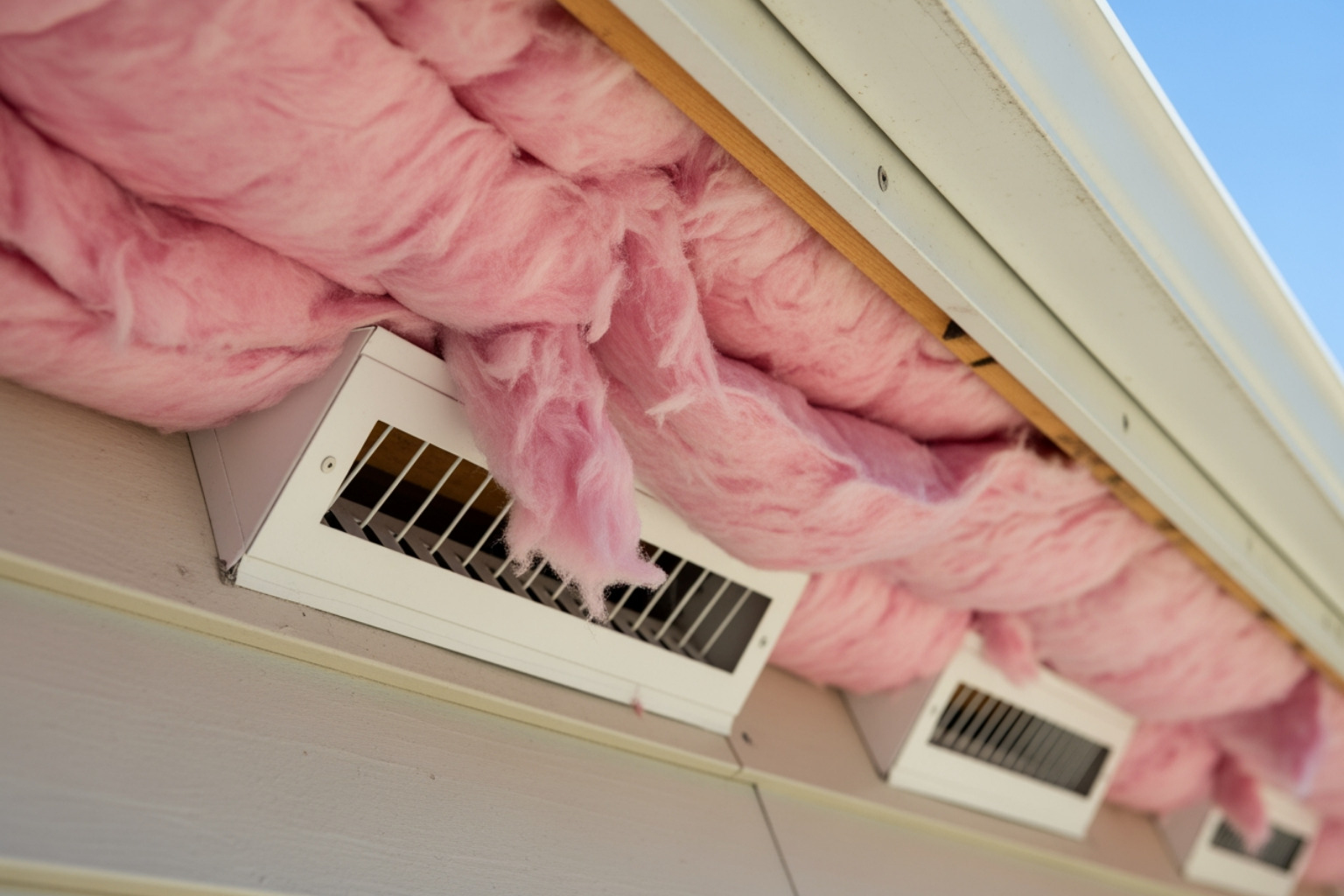
Often, during a DIY insulation project or a hurried renovation, homeowners or contractors push insulation all the way into the corners, accidentally blocking the soffit vents. This chokes off the airflow. Without that cross-ventilation, humid air becomes trapped against the cold underside of the roof deck. According to the Environmental Protection Agency mold guide, humidity higher than 60% provides the perfect environment for mold to flourish.
The “Winter Condensation” Trap
In New England, we see a lot of “bypass” issues. This happens when warm, moist air from your living room, kitchen, or bathroom leaks into the attic through unsealed light fixtures, attic hatches, or plumbing stacks. When that warm air hits the freezing cold plywood of your roof in January, it turns into liquid water (condensation) or even frost. When that frost melts in the spring, it provides the 48 hours of moisture mold needs to start a colony.
Improper Exhaust Venting
Believe it or not, we frequently see bathroom or kitchen exhaust fans that terminate inside the attic rather than being ducted all the way outside. Every time someone takes a hot shower, gallons of moisture are pumped directly onto the roof rafters. This is a violation of most building codes and a guaranteed recipe for mold.
Roof Leaks and Ice Dams
While condensation is a slow, widespread killer, a roof leak is usually more localized. Leaks around chimneys, skylights, or valleys can saturate insulation and wood. Additionally, ice dams—common in places like Manchester, NH or Worcester, MA—can back up water under shingles, leading to significant moisture intrusion. If you’ve dealt with water damage recently, you may want to learn more about mold remediation services to ensure no hidden growth has started behind your rafters.
Identifying the Signs of Attic and Basement Moisture
Because we don’t hang out in our attics, we have to rely on specific visual and sensory clues. If you suspect an issue, grab a flashlight and look for these “red flags.”
Visual Clues on Plywood and Rafters
The most obvious sign is discoloration. This can look like black, grey, or white “fuzzy” patches. Often, it appears as dark stains on the attic plywood (sheathing). If you see black stains covering 15 square feet or more, you aren’t looking at a “new” problem; you’re looking at an established colony.
The “Rusted Nail” Test
Take a look at the tips of the roofing nails poking through the plywood. Are they rusted? In a healthy, dry attic, those nails should look relatively clean. If they are rusted or have “halos” of dark staining around them, it’s a sign that condensation has been forming on those cold metal points. In the winter, you might even see actual frost buildup on these nails.
Odor and Air Quality
Does your attic smell like “stinky gym socks” or a wet dog? That unmistakable musty odor is caused by microbial volatile organic compounds (mVOCs) released by mold as it grows. If you smell this in your upstairs hallway, the spores may already be migrating.
Comparing Symptoms
It’s important to distinguish between a roof leak and a ventilation issue.
Location
- Likely roof leak: localized near a chimney, valley, flashing, or roof vent
- Likely ventilation or condensation issue: spread across the north side or large sections of the attic
Pattern
- Likely roof leak: visible water streaks or runs down the wood
- Likely ventilation or condensation issue: more even spotting, often a salt-and-pepper appearance
Nails
- Likely roof leak: rusted nails concentrated in one area
- Likely ventilation or condensation issue: rusted nails throughout the attic
Insulation
- Likely roof leak: soaking wet in a single spot
- Likely ventilation or condensation issue: damp across the top surface in multiple areas
If you notice these signs in your basement as well, it’s worth reviewing basement-mold-remediation-dangers-treatments-costs to see how moisture behaves at the opposite end of your home.
Professional vs. DIY Remediation Strategies
When you discover mold, the natural instinct is to grab a bucket of bleach and a scrub brush. But wait! Attic mold is tricky. Before you start, you need to determine if it’s safe for you to handle.
The industry standard (and our recommendation) is the 10 Square Foot Rule. If the affected area is less than 10 square feet (roughly a 3×3 patch), a healthy homeowner can usually manage a DIY cleanup. If the mold covers more than 10 square feet, or if it has entered your HVAC system, it is time to call in the pros.
Safety First: The “Remediator’s Uniform”
Mold spores are microscopic. When you disturb them, they become airborne. If you are attempting a small cleanup, you must wear:
- An N-95 respirator safety mask (minimum) to prevent inhalation.
- protective gloves with long cuffs to keep chemicals and spores off your skin.
- goggles or eye protection (the unvented kind) to prevent spores from entering your tear ducts.
Why Professionals Are Different
At Banner Environmental Services, we don’t just “clean” mold; we remediate the environment. This involves:
- Containment: We use 6-mil plastic sheeting and “negative air” machines with HEPA filters to ensure spores don’t fly into your bedrooms while we work.
- Advanced Removal: We use techniques like dry ice blasting or soda blasting. These methods are incredible—they lift the mold off the wood fibers without leaving the wood wet, which is the main flaw of liquid cleaners.
- HEPA Vacuuming: We use industrial vacuums that trap 99.97% of particles. Never use a standard shop-vac; it will just exhaust the spores back into the air.
- Compliance: Our team ensures asbestos-abatement-mold-remediation-massachusetts protocols are followed if your home contains older materials like vermiculite.
Safe DIY Steps for Minor Attic Mold Removal
If you have a small patch (under 10 sq. ft.) and want to handle it yourself, follow these steps:
- Fix the Leak First: Don’t clean until the water stops coming in.
- Use the Right Products: Avoid straight bleach. The EPA actually discourages bleach for mold on porous surfaces like wood. Bleach is mostly water; the chlorine stays on top while the water soaks into the wood, actually feeding the mold roots. Instead, use:
- white vinegar: Its acidity kills about 82% of mold species.
- baking soda: Mixed with water, it’s a mild disinfectant that absorbs moisture.
- tea tree essential oil: A powerful natural antifungal (add a few drops to your vinegar spray).
- Concrobium: A commercially available product that crushes mold spores as it dries.
- Damp-Wipe: Never dry-brush mold. Spray the area lightly so it’s damp, then scrub. This keeps the spores from taking flight.
- Bag it Up: Any moldy insulation or rags should be double-bagged before leaving the attic.
When to Hire Professionals for Attic Mold Removal
There are “no-go” zones for DIY. You should call a professional if:
- The mold is widespread (over 10-15 sq. ft.).
- The wood is soft or “punky” to the touch (structural rot).
- You see mold inside your HVAC system or ductwork.
- Someone in the home has severe asthma, allergies, or a compromised immune system.
- The attic is difficult to navigate. Attics are dangerous; one wrong step and you’re through the ceiling of the room below!
Licensed pros use HEPA filter requirements to scrub the air and apply antimicrobial sealants (like Foster 40-80 or Bora-Care) that prevent the mold from returning.
Long-Term Prevention and Structural Maintenance
Once the mold is gone, you want it to stay gone. This requires a “whole-attic” approach to environmental control.
Balance Your Ventilation
Ensure you have a 50/50 balance between intake and exhaust. A common rule of thumb is 1 square foot of net free vent area for every 150-300 square feet of attic floor space. If you have ridge vents, make sure your soffit vents aren’t painted shut or blocked by insulation.
Install Baffles and Proper Insulation
Install “baffles” or “rafter vents.” These are plastic channels that sit against the roof deck and ensure a clear path for air to travel from the soffit to the ridge, even if you have thick insulation. Speaking of insulation, in New England, you should aim for a minimum of R-49 to R-60 (about 15-20 inches of material). This keeps the heat in your house and off your roof deck, preventing the condensation cycle.
Air Sealing
This is the “secret sauce” of mold prevention. Use spray foam or caulk to seal every single hole where wires, pipes, or light fixtures go from your ceiling into the attic. This stops the “warm-moist-air” express from reaching your cold roof.
Seasonal Checkups
We recommend an attic “physical” twice a year—once in the spring and once in the fall. Check for:
- Bird or critter nests blocking vents.
- Disconnected dryer or bathroom ducts.
- New water stains after a heavy storm.
For larger homes or businesses, mold-remediation/removal-abatement/ strategies might also include installing a dedicated attic dehumidifier if the architecture doesn’t allow for passive ventilation.
Frequently Asked Questions about Attic Moisture
How much does professional remediation cost?
While we don’t provide specific quotes without an inspection, industry data shows that attic mold removal typically averages between $1,200 and $3,750. Factors that influence the price include the square footage of the mold, the height of the roof, and whether insulation needs to be removed and replaced. A professional mold-remediation/inspection-testing/ usually costs between $450 and $800+ but provides the roadmap you need for a successful fix.
Should I replace moldy insulation or plywood?
- Insulation: If fiberglass or cellulose insulation gets moldy, it must be replaced. You cannot effectively clean porous insulation. It acts like a giant sponge for spores.
- Plywood: If the plywood is structurally sound (not soft or delaminating), it can usually be cleaned, sanded, and sealed. However, if the mold has caused the layers of the plywood to separate (delamination), those sections need to be replaced. For more on this, see mold-remediation-black-mold-removal/.
Is attic mold a health hazard for my family?
Yes. Even if you don’t spend time in your attic, your house acts like a chimney. Warm air rises and escapes through the top, but “stack effect” can also pull attic air down into the living space through those unsealed gaps we mentioned earlier. Mold can trigger allergies, headaches, and respiratory issues. Furthermore, using the wrong chemicals like sodium hypochlorite toxicity (standard bleach) in a confined attic space can create hazardous fumes for the person doing the cleaning.
Protecting Your Home Investment
Your home is likely your largest investment, and the attic is its first line of defense against the elements. Ignoring a “little bit of mold” can lead to rotted roof decks, failed home inspections during a sale, and health concerns for your family.
At Banner Environmental Services, we bring over 25 years of experience to every job across Massachusetts, Rhode Island, and New Hampshire. As a WBE/DCAMM certified company, we pride ourselves on a professional, licensed team that prioritizes OSHA and EPA compliance. Whether you’re dealing with a minor moisture issue or need Professional Asbestos and Vermiculite Removal, we have the tools—from HEPA vacuums to dry ice blasting—to get the job done right the first time.
Don’t let a moisture problem go from a “low” to a “high” risk. If you’ve spotted the signs of attic mold, contact us today for a professional inspection. We’ll help you breathe easier by ensuring your home is dry, safe, and mold-free.