
Renovation work becomes more complicated when asbestos-containing materials may be present. A wall opening, flooring removal, ceiling replacement, pipe repair, or demolition phase can disturb materials that were stable for decades. That is why asbestos containment is one of the most important safety measures in a properly managed renovation project.
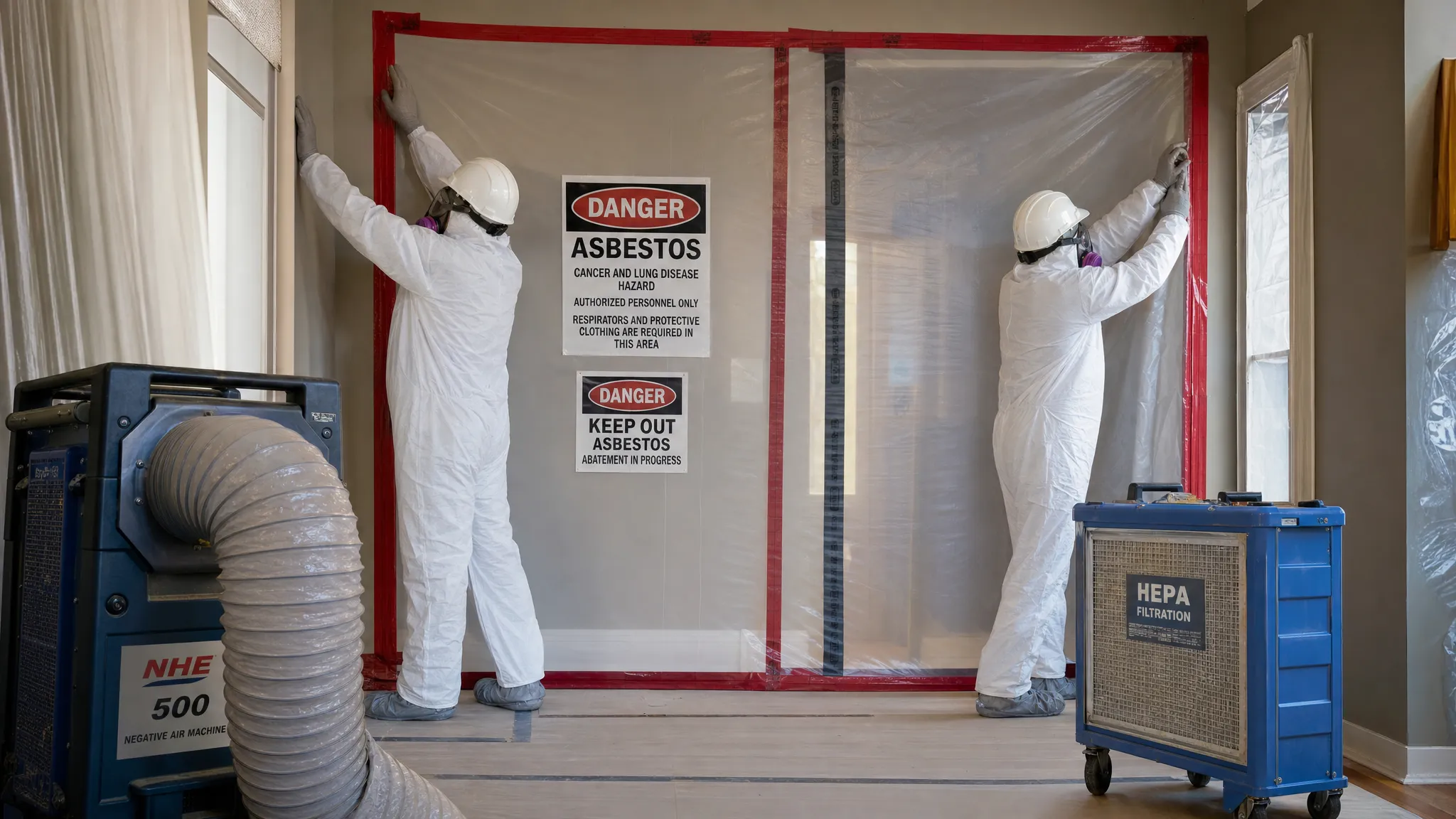
Containment is not simply “putting up plastic.” It is a controlled work environment designed to keep asbestos fibers from migrating into occupied spaces, HVAC systems, hallways, adjacent rooms, or outdoor areas. When planned and installed correctly by licensed professionals, containment helps protect occupants, workers, neighboring trades, and the long-term usability of the building.
For homeowners, property managers, facility directors, and contractors, understanding the basics of asbestos containment can help you ask better questions, plan realistic schedules, and avoid unsafe renovation decisions.
What Is Asbestos Containment?
Asbestos containment is the process of isolating an asbestos work area from the rest of a building or property. The goal is to control dust, debris, air movement, worker access, equipment movement, and waste handling while asbestos-containing materials are being inspected, removed, repaired, encapsulated, or otherwise managed.
The U.S. Environmental Protection Agency explains that asbestos can become a health concern when fibers are released into the air and inhaled. Many asbestos-containing materials are not a concern when intact and undisturbed, but renovation and demolition activities can change that quickly.
Professional containment is used to reduce that risk. Depending on the material, building type, project scope, and applicable regulations, containment may include sealed barriers, negative air pressure, HEPA filtration, decontamination areas, controlled worker entry, wet methods, waste packaging, and clearance procedures.
Why Containment Matters During Renovation
Renovation work is inherently disruptive. Cutting, scraping, sanding, drilling, prying, grinding, and demolishing building components can release dust. If those components contain asbestos, dust control becomes a regulated safety issue, not just a housekeeping concern.
Containment matters because asbestos fibers are microscopic. They cannot be reliably detected by sight, smell, or routine cleaning. Once fibers move beyond the work area, they can settle on surfaces, enter ventilation pathways, contaminate adjacent rooms, and complicate the entire renovation.
For occupied buildings, containment also helps minimize disruption. Schools, healthcare facilities, municipal buildings, multifamily properties, and commercial spaces often need to keep portions of a building operational while work occurs in a limited area. Proper containment helps separate the work zone from areas that remain in use.
For contractors, containment protects the project schedule. Discovering asbestos after demolition has started can stop work, trigger regulatory involvement, require emergency cleanup, and delay other trades. A planned containment approach is much easier to manage than a reactive response after suspected contamination has spread.
Common Materials That May Require Containment
Asbestos was widely used in building materials because it resisted heat, fire, and chemical damage. In New England, many older residential, institutional, and commercial buildings still contain legacy asbestos materials.
Materials that may require professional evaluation before renovation include:
- Pipe insulation, boiler insulation, and duct insulation
- Vinyl floor tile, sheet flooring, and black mastic adhesive
- Plaster, joint compound, and textured ceiling materials
- Ceiling tiles and acoustical materials
- Fireproofing, fire doors, and fire-rated assemblies
- Roofing, siding, and exterior cementitious panels
- Vermiculite insulation in attics or wall cavities
- Transite panels, lab countertops, and older mechanical room materials
Not every material requires the same containment setup. The condition of the material, whether it is friable, how it will be disturbed, and the regulatory classification of the project all matter. Friable materials can be crumbled or reduced to powder by hand pressure and often require more stringent controls. Non-friable materials may still become hazardous if cut, sanded, ground, or broken.
The safest starting point is testing. If a material is suspect and the building is older, assume it needs professional evaluation before disturbance.
Key Components of a Professional Containment System
A containment system is built around controlling the work area, the air, the workers, the waste, and the final cleanup. The specific setup depends on the project, but the core concepts are consistent.
| Containment component | Purpose during renovation work |
|---|---|
| Critical barriers | Seal openings such as doors, vents, windows, penetrations, and gaps that could allow dust migration |
| Poly sheeting and sealed enclosures | Separate the asbestos work area from occupied or unaffected spaces |
| Negative air machines | Create inward airflow so air moves into the work area rather than out of it |
| HEPA filtration | Capture extremely small airborne particles from air and cleanup equipment |
| Decontamination area | Provide controlled worker entry and exit to reduce tracking dust outside containment |
| Warning signage and access control | Keep unauthorized people away from regulated work areas |
| Waste packaging and labeling | Control contaminated debris from removal through transport and disposal |
| Final cleaning and clearance | Confirm the work area is cleaned before containment is dismantled |
Containment is a system. If one part is missing or poorly maintained, the entire project can be affected. For example, negative air pressure is less effective if barriers are not sealed properly. Final cleaning is less reliable if debris was tracked through an unprotected hallway. Clearance testing may fail if containment is removed too soon.
How Negative Air Pressure Works
Negative air pressure is one of the most important concepts in asbestos containment. In simple terms, the contained work area is placed under lower air pressure than surrounding spaces. This encourages air to flow into the work area instead of escaping from it.
Professionals typically use negative air machines equipped with HEPA filters. These machines draw air from inside the containment, filter it, and exhaust it according to the project design and regulatory requirements. The system is monitored so the contractor can verify that airflow is being controlled.
This matters during renovation because buildings are full of pathways for air movement. Stairwells, ceiling cavities, wall penetrations, pipe chases, elevator shafts, and HVAC returns can all move air farther than people expect. Without proper isolation, dust from a small work area can travel into areas that were never part of the renovation.
Negative air is not a substitute for careful work practices. It works alongside wet methods, controlled removal techniques, sealed waste handling, and thorough cleaning.
Containment Planning Starts Before Demolition
The best time to plan asbestos containment is before renovation begins. That usually means conducting an asbestos survey or inspection in areas that will be disturbed. A qualified inspector collects representative samples of suspect materials and sends them to an accredited laboratory for analysis.
Once the results are known, the project team can determine whether asbestos abatement is required before renovation, whether materials can remain undisturbed, or whether a management plan is appropriate.
Good planning also includes coordination with other trades. Renovations often involve plumbing, HVAC, electrical, flooring, framing, and finish work. Each trade needs to understand which areas are restricted and when access will be allowed. The same principle applies across responsible building services: diagnose hidden conditions before opening walls, floors, or ceilings, much like licensed plumbing and drain professionals such as TapTech emphasize root-cause diagnosis before repairs.
For commercial, institutional, and municipal projects, sequencing is especially important. If asbestos abatement delays mechanical work, or if demolition begins before abatement is complete, the project can lose time and create avoidable safety concerns.
What Happens During Professional Asbestos Containment?
While every project is different, a professional asbestos containment process typically follows a controlled sequence.
- Site assessment and scope confirmation: The contractor reviews survey results, work areas, access points, utilities, occupant concerns, waste handling routes, and regulatory requirements.
- Notifications and permits when required: Depending on the jurisdiction, building type, material, and project size, notifications or permits may be required before work begins.
- Work area isolation: Crews establish the regulated area, post warning signs, restrict access, and protect adjacent surfaces.
- Containment construction: Barriers, critical seals, decontamination areas, and negative air systems are installed according to the project design.
- Controlled abatement work: Licensed workers use approved procedures to remove, repair, or encapsulate asbestos-containing materials while limiting fiber release.
- Waste handling: Contaminated materials are packaged, labeled, transported, and disposed of according to applicable asbestos waste requirements.
- Cleaning and clearance: The work area is cleaned using HEPA equipment and approved methods, then inspected or tested before containment is removed when required.
This sequence is why asbestos work should not be treated as ordinary demolition. The containment setup, worker protection, air control, cleaning standards, and disposal requirements are all part of the safety and compliance process.
OSHA, EPA, and State Requirements
Asbestos containment is guided by federal, state, and local regulations. Requirements can vary depending on whether the project is residential, commercial, institutional, or public sector work.
The OSHA asbestos standard for construction addresses worker protection during asbestos-related construction activities. It includes requirements related to exposure assessment, regulated areas, respiratory protection, training, hygiene facilities, and work practices.
The EPA also regulates certain asbestos activities, including asbestos work in schools and asbestos emissions during demolition and renovation under the National Emission Standards for Hazardous Air Pollutants. Many states have additional licensing, notification, disposal, and clearance requirements.
In New England, property owners and contractors should be especially careful because state environmental and public health agencies can have specific rules for asbestos inspections, abatement notifications, waste shipments, and licensed personnel. Schools, healthcare facilities, municipal buildings, and large commercial projects often require additional documentation and coordination.
This article is educational and should not be treated as legal advice. Before starting a renovation, consult qualified environmental professionals and the applicable regulatory agencies for the project location.
Containment in Occupied Buildings
Many asbestos projects take place in buildings that cannot fully shut down. A school may need to keep administrative offices open. A healthcare facility may need to maintain patient services. A multifamily building may have occupied units near the work area. A commercial property may need to protect tenants and customers while renovation continues elsewhere.
In these situations, containment planning should address more than the immediate abatement area. It should also consider occupant communication, work hours, access routes, noise, waste movement, emergency exits, and air handling systems.
HVAC coordination is particularly important. If air returns, ducts, or mechanical rooms connect the work area to other spaces, they may need to be isolated or shut down according to the project plan. Failure to account for air movement can undermine even a well-built physical containment barrier.
Clear communication also matters. Building occupants do not need technical details about every step, but they should know which areas are restricted, how long work is expected to last, and who to contact with questions.
Clearance Before Reoccupancy
Containment should not be dismantled simply because removal work appears finished. The final phase is cleaning, inspection, and, when required, clearance testing.
Clearance may involve a visual inspection, air sampling, or both. In many projects, an independent third-party industrial hygienist or licensed inspector performs clearance to confirm that the area meets the required criteria before containment comes down. This is especially common in schools, commercial buildings, and regulated abatement projects.
Clearance provides documentation that the work area was cleaned and evaluated before the next phase of renovation. It also protects the owner, contractor, and future occupants by creating a record of the abatement process.
Once containment is removed, reconstruction, finish work, flooring installation, mechanical work, or occupancy can proceed based on the project plan.
Common Mistakes That Put Renovations at Risk
Many asbestos problems during renovation begin with assumptions. A contractor assumes the material is not asbestos. A homeowner assumes old flooring is harmless. A building owner assumes prior renovations removed all hazardous materials. A crew assumes a small disturbance is not significant.
Common mistakes include:
- Starting demolition before asbestos testing is completed
- Using ordinary shop vacuums instead of HEPA-filtered equipment
- Cutting or grinding suspect materials without evaluation
- Allowing multiple trades to enter a regulated work area
- Leaving HVAC systems active without proper review
- Removing containment before final cleaning and clearance
- Treating asbestos waste like ordinary construction debris
These mistakes can create health concerns, regulatory problems, project delays, and added cleanup costs. In many cases, the cost of proper planning is far lower than the cost of correcting uncontrolled contamination.
How Containment Supports Safer Renovation Scheduling
Containment is sometimes viewed as a delay, but in practice it often protects the schedule. When asbestos work is planned early, the renovation team can sequence the project around known conditions.
For example, a flooring renovation may require asbestos floor tile and mastic removal before new finishes are installed. A boiler room upgrade may require pipe insulation abatement before mechanical contractors begin work. A school renovation may require phased containment areas so summer work can stay on schedule while adjacent spaces remain protected.
The key is integrating environmental work into the construction plan rather than treating it as a last-minute obstacle. This is where an environmental contractor with abatement, demolition, restoration, and reconstruction capabilities can help reduce handoffs. When hazardous materials, selective demolition, and rebuilding are coordinated under one project plan, owners often gain clearer communication and fewer gaps between phases.
Banner Environmental Services has worked with residential, commercial, industrial, municipal, and institutional clients throughout New England since 1994. For projects where asbestos containment overlaps with demolition, restoration, or reconstruction, early coordination can help property owners plan more safely and efficiently.
When to Request an Asbestos Containment Assessment
You should consider a professional asbestos assessment before renovation if the building was constructed before the late 1980s, if previous surveys are unavailable, or if the project will disturb suspect materials. This is especially important before demolition, mechanical upgrades, flooring removal, ceiling work, wall openings, roofing, siding replacement, or attic insulation removal.
Property owners should also request guidance if asbestos was discovered unexpectedly during renovation. In that situation, work should stop in the affected area until the material can be evaluated. Continuing to disturb suspect material can make containment and cleanup more difficult.
A qualified environmental professional can help determine whether testing is needed, what containment may be appropriate, which notifications may apply, and how abatement should be coordinated with the rest of the renovation.
Frequently Asked Questions
Is asbestos containment required for every renovation? Not every renovation requires asbestos containment, but any renovation that may disturb asbestos-containing materials should be evaluated by qualified professionals. The need for containment depends on the materials, work methods, building type, and applicable regulations.
Can renovation continue outside the containment area? In many projects, work can continue in unaffected areas if the containment, access routes, HVAC controls, and safety plan support it. This must be coordinated carefully so other trades do not enter restricted areas or disturb suspect materials.
How long does asbestos containment stay in place? Containment remains in place until the abatement work, cleaning, inspection, and any required clearance testing are complete. Removing containment too early can spread contamination and may require additional cleanup.
Can I enter an asbestos containment area to check progress? Property owners, tenants, and unauthorized workers should not enter an active asbestos containment area. Access is typically limited to trained and properly protected personnel following the project’s safety procedures.
What is the difference between containment and encapsulation? Containment is the controlled work area used to prevent asbestos fibers from spreading during work. Encapsulation is a management method where an approved coating or sealant is applied to certain asbestos-containing materials to reduce fiber release when removal is not the selected approach.
Plan Renovation Work With Safety First
Asbestos containment is a critical part of safer renovation work. It protects people, limits contamination, supports regulatory compliance, and helps the larger project move forward with fewer surprises.
If you are planning renovation, demolition, restoration, or reconstruction in an older building, schedule an asbestos inspection before disturbing suspect materials. Banner Environmental Services provides licensed environmental remediation, asbestos abatement, demolition, restoration, and reconstruction support throughout New England, including Massachusetts, Rhode Island, Connecticut, New Hampshire, Maine, and Vermont.
For guidance on a renovation project, speak with a licensed environmental professional and request a project assessment before work begins.